
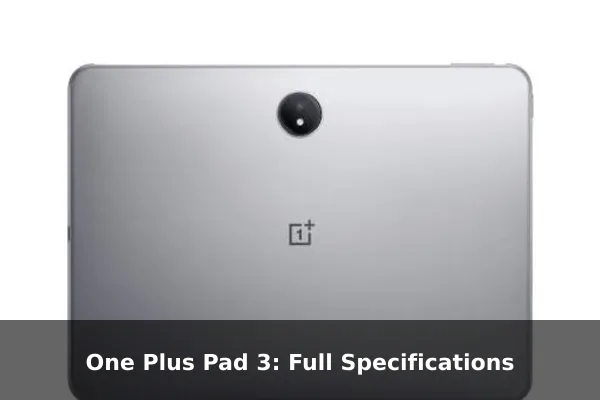
The One Plus Pad 3 lands as a Wi-Fi-only flagship Android tablet that tries to undercut premium iPads while still packing top-tier silicon. With a 13.2-inch display, the Snapdragon 8 Elite chipset, an 8-speaker array, and a 12,140 mAh battery, it is positioned as a productivity and entertainment slate that genuinely earns its flagship label rather than just borrowing it from the phone lineup.
At around 600 EUR, the OPD2415 model arrives in a single Storm Blue finish with stylus support, 80W wired charging, and storage configurations stretching up to 512GB with 16GB of RAM. This article looks beyond the spec sheet to discuss how those numbers translate into day-to-day value, where the tablet shines, and which user it actually fits.
Full Specifications
Network
| Technology: | No cellular connectivity |
| 2G bands: | N/A |
| 3G bands: | N/A |
| 4G bands: | N/A |
| GPRS: | No |
| EDGE: | No |
Launch
| Announced: | 2025, June 05 |
| Status: | Available. Released 2025, June 19 |
Body
| Dimensions: | 289.6 x 209.7 x 6 mm (11.40 x 8.26 x 0.24 in) |
| Weight: | 675 g (1.49 lb) |
| Build: | Glass front, aluminum frame, aluminum back |
| SIM: | No |
| Stylus support |
Display
| Type: | IPS LCD, 68B colors, Dolby Vision, 144Hz, 900 nits (HBM) |
| Size: | 13.2 inches, 530.0 cm2 (~87.3% screen-to-body ratio) |
| Resolution: | 2400 x 3392 pixels (~315 ppi density) |
Platform
| OS: | Android 15, ColorOS 15 |
| Chipset: | Qualcomm SM8750-AB Snapdragon 8 Elite (3 nm) |
| CPU: | Octa-core (2×4.32 GHz Oryon V2 Phoenix L + 6×3.53 GHz Oryon V2 Phoenix M) |
| GPU: | Adreno 830 |
Memory
| Card slot: | No |
| Internal: | 256GB 12GB RAM, 512GB 16GB RAM |
| UFS 4.0 |
Main Camera
| Single: | 13 MP |
| Features: | Color spectrum sensor, LED flash |
| Video: | 4K@30fps, 1080p@30ps, gyro-EIS |
Selfie camera
| Single: | 8 MP |
| Video: | 1080p@30fps |
Sound
| Loudspeaker: | Yes, with stereo speakers (8 speakers) |
| 3.5mm jack: | No |
| 24-bit/192kHz audio |
Comms
| WLAN: | Wi-Fi 802.11 a/b/g/n/ac/6/7, dual-band |
| Bluetooth: | 5.4, A2DP, LE, aptX HD |
| Positioning: | No |
| NFC: | No |
| Radio: | No |
| USB: | USB Type-C 3.2, OTG, accessory connector |
Features
| Sensors: | Accelerometer, proximity (accessories only), gyro, compass |
Battery
| Type: | 12140 mAh |
| Charging: | 80W wired |
Misc
| Colors: | Storm Blue |
| Models: | OPD2415 |
| Price: | About 600 EUR |
Our Tests
| Loudspeaker: | -23.6 LUFS (Very good) |
| Battery: | Active use score 10:49h |
Price and Availability
The One Plus Pad 3 offers a compelling combination of features and performance. While the base price is around €600, the actual cost may vary depending on your location and retailer. Below, you’ll find the approximate price of the One Plus Pad 3 converted into various currencies. Please note that these are estimates based on recent exchange rates as of June 7, 2026 and may not reflect the exact price you’ll find at a retailer.
- United States: $694
- Japan: ¥111,140
- United Kingdom: £518
- Australia: A$980
- Canada: C$966
- Taiwan: NT$21,877
- Denmark: kr4.477
- Saudi Arabia: ﷼2,602
- South Korea: ₩1,075,094
- Germany: €600
- Brazil: R$3.541
- Vietnam: ₫18.219.588
- Kenya: KSh 90,022
- India: ₹66,261
- Indonesia: Rp 12.576.239
- Nigeria: ₦937,004
- Pakistan: ₨193,128
- Philippines: ₱42,813
- Bangladesh: ৳৮৫,১০৭
Value Proposition at Around 600 EUR
The One Plus Pad 3 is priced from approximately 600 EUR, which puts it squarely against mid-cycle Android tablets while offering hardware that often sits a class above. You are paying flagship money for flagship internals: the Snapdragon 8 Elite, UFS 4.0 storage, Wi-Fi 7, and a 12,140 mAh battery. Compared to most premium tablets in this bracket, the headline win is raw silicon paired with a generously sized 13.2-inch panel, which makes it feel less like a scaled-up phone and more like a portable display for work and media. Pricing and regional availability can shift, so confirm current figures with OnePlus before purchase.
Design and Build Quality
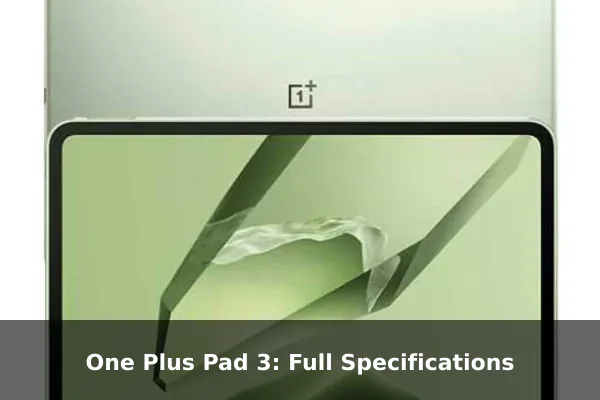
Measuring 289.6 x 209.7 x 6 mm and tipping the scales at 675 g, the One Plus Pad 3 is slim for a 13-inch slate but not exactly light. The glass front with aluminum frame and aluminum back gives it a premium feel that matches its price, while the unified Storm Blue colorway keeps the aesthetic restrained. There is no SIM tray, which signals its identity as a Wi-Fi-only device intended for home, office, or tethered mobile use. Stylus support is included, opening the door to note-taking, sketching, and annotation workflows that benefit from the larger canvas.
Display Experience for Media and Work
The 13.2-inch IPS LCD panel pushes a 2400 x 3392 resolution at roughly 315 ppi, refreshes at 144Hz, and peaks at 900 nits in high-brightness mode. Dolby Vision support and the 8-bit-plus color depth make it competent for HDR streaming, while the high refresh rate keeps scrolling and stylus input feeling fluid. The aspect ratio leans tall, which is friendlier to split-screen multitasking and document work than typical 16:10 slates. IPS technology will not produce the inky blacks of an OLED, but the brightness ceiling and color performance are tuned well for indoor productivity and casual outdoor use.
Performance With the Snapdragon 8 Elite
Inside, the Qualcomm SM8750-AB Snapdragon 8 Elite leads the charge on a 3 nm process, paired with an Adreno 830 GPU. The octa-core CPU configuration uses two Oryon V2 Phoenix L cores up to 4.32 GHz and six Phoenix M cores at 3.53 GHz, a layout originally tuned for flagship phones. Inside a tablet chassis with more thermal headroom, the chipset has room to stretch, helping sustain performance during long sessions of gaming, video editing, or heavy multitasking. Memory choices of 12GB or 16GB RAM with 256GB or 512GB UFS 4.0 storage round out a configuration aimed at users who will keep the device for several years.
Cameras: Functional, Not Headlining
Camera hardware is intentionally restrained. A single 13 MP rear shooter with LED flash and a color spectrum sensor handles document scans, casual photography, and video up to 4K at 30 fps with gyro-EIS. The 8 MP front camera covers 1080p at 30 fps for video calls and remote meetings. This is not a tablet you buy for photography, but the optics are adequate for the workflows most tablet owners actually use: scanning paperwork, joining conference calls, and recording occasional clips.
Battery Life and Charging
The 12,140 mAh battery is one of the more compelling parts of the package. Combined with 80W wired charging, the One Plus Pad 3 promises top-ups that feel reasonable given the cell size, and our reference active-use score sits at 10:49h, indicating solid endurance under mixed productivity workloads. Always check the official safety guide and box contents for charger specifications and regional charging caveats, since included accessories can vary by market.
Sound, Connectivity, and Sensors
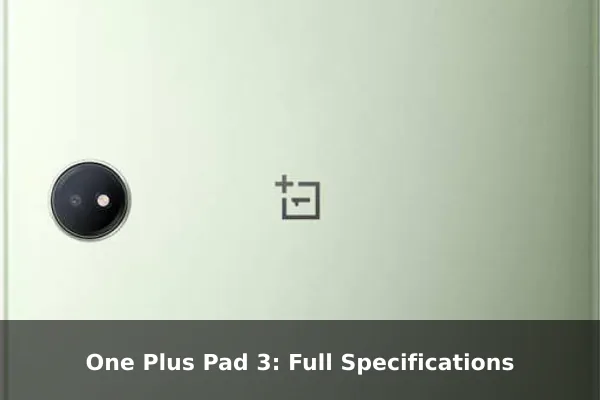
An eight-speaker stereo array supports 24-bit/192kHz audio playback, and our loudness measurement of -23.6 LUFS lands in the very good range for a tablet, meaning comfortably loud output without obvious distortion. Connectivity covers Wi-Fi 7 with dual-band support, Bluetooth 5.4 with aptX HD, and a USB Type-C 3.2 port with OTG and an accessory connector for keyboards or docks. There is no 3.5mm jack, no NFC, no GPS, and no FM radio, which keeps the tablet firmly anchored to wireless audio and Wi-Fi-based location services. Sensors are limited to accelerometer, proximity (accessories only), gyro, and compass.
Software and Long-Term Usability
The One Plus Pad 3 ships with ColorOS 15 on top of Android 15. The interface adds tablet-specific multitasking features such as floating windows and split-screen, alongside stylus integration for note apps. As with any Android tablet purchase, look up the manufacturer’s current update policy for the specific market and model before committing, since security and feature update timelines can shape the device’s useful life.
Who Should Buy the One Plus Pad 3
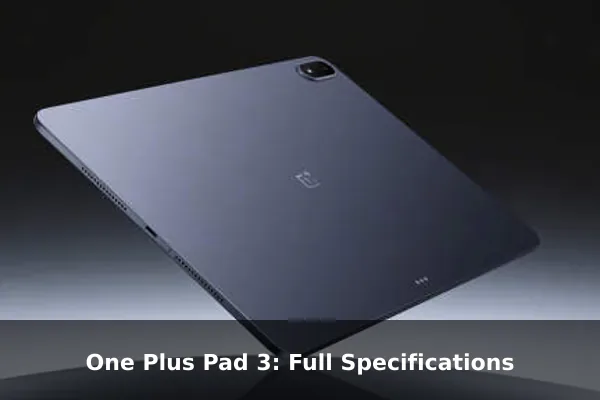
This tablet is a strong match for students, knowledge workers, and creators who want a large, high-refresh display, flagship-grade silicon, and substantial battery life without paying the absolute top dollar of competing premium tablets. Frequent travelers who rely on cellular data should look elsewhere, since there is no SIM support. Users who prioritize OLED contrast over LCD brightness, or who need NFC and GPS, will also want to weigh those omissions carefully against the hardware advantages.
Conclusion
The One Plus Pad 3 delivers a confident package: flagship silicon, a sizeable 13.2-inch high-refresh display, an eight-speaker array, and a large battery, all wrapped in a slim aluminum body at a roughly 600 EUR starting price. The trade-offs are deliberate, with no cellular, no NFC, and an LCD instead of OLED. If those omissions do not affect your workflow, this is a compelling productivity and media tablet that punches above its price tag and is well worth shortlisting.
Official references
- OnePlus Pad 3 Official Specs – Primary manufacturer specifications for dimensions, display, chipset, memory, battery, cameras, connectivity, OS, and in-box items.
- OnePlus Pad 3 Official Product Page – Official product overview with feature claims, footnotes, battery and charging disclaimers, accessory details, and regional availability context.
- OnePlus Pad 3 US and Canada Launch Press Release – Official launch source for release positioning, market availability, pricing context, and key product claims.
- OnePlus Pad 3 Safety Guide – Official safety and regulatory document confirming model OPD2415 and providing charging, radio, compliance, and device safety information.
- Qualcomm Snapdragon 8 Elite Mobile Platform – Primary chipset manufacturer reference for the Snapdragon 8 Elite platform used in the OnePlus Pad 3.
