
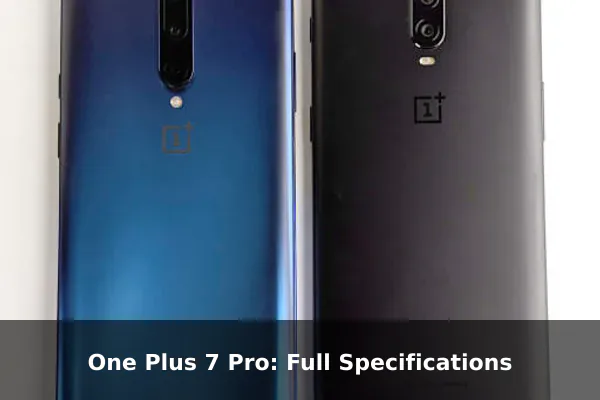
The OnePlus 7 Pro arrived in May 2019 as the brand’s most ambitious flagship to date, trading the safe, value-first formula of earlier OnePlus phones for a genuine high-end experience. With a tall, notch-free Fluid AMOLED screen, a motorized pop-up selfie camera, and the brand’s first true triple rear camera, it pushed OnePlus firmly into premium territory while keeping a starting price of around 590 EUR.
Even years after launch, the OnePlus 7 Pro remains an interesting reference point for anyone studying how flagships evolved. This article focuses on what the hardware actually delivers in day-to-day use and how its specifications hold up, rather than simply listing numbers. For verified figures, OnePlus official pages, GSMArena, and Qualcomm’s Snapdragon 855 documentation remain the most reliable anchors.
Full Specifications
Network
| Technology: | GSM / CDMA / HSPA / LTE |
| 2G bands: | GSM 850 / 900 / 1800 / 1900 |
| CDMA 800 / 1900 & TD-SCDMA | |
| 3G bands: | HSDPA 800 / 850 / 900 / 1700(AWS) / 1800 / 1900 / 2100 |
| 4G bands: | 1, 2, 3, 4, 5, 7, 8, 12, 13, 17, 18, 19, 20, 25, 26, 28, 29, 32, 34, 38, 39, 40, 41, 66 – Global |
| 1, 2, 3, 4, 5, 7, 8, 12, 13, 17, 18, 19, 20, 25, 26, 28, 29, 32, 34, 38, 39, 41, 46, 48, 66, 71 – North America | |
| Speed: | HSPA 42.2/5.76 Mbps, LTE (5CA) Cat18 1200/150 Mbps |
Launch
| Announced: | 2019, May 14 |
| Status: | Available. Released 2019, May 16 |
Body
| Dimensions: | 162.6 x 75.9 x 8.8 mm (6.40 x 2.99 x 0.35 in) |
| Weight: | 206 g (7.27 oz) |
| Build: | Glass front (Gorilla Glass 5), glass back (Gorilla Glass 5), aluminum frame |
| SIM: | Nano-SIM + Nano-SIM |
Display
| Type: | Fluid AMOLED, 90Hz, HDR10+ |
| Size: | 6.67 inches, 108.8 cm2 (~88.1% screen-to-body ratio) |
| Resolution: | 1440 x 3120 pixels, 19.5:9 ratio (~516 ppi density) |
| Protection: | Corning Gorilla Glass 5 |
Platform
| OS: | Android 9.0 (Pie), upgradable to Android 12, OxygenOS 12.1 |
| Chipset: | Qualcomm SM8150 Snapdragon 855 (7 nm) |
| CPU: | Octa-core (1×2.84 GHz Kryo 485 & 3×2.42 GHz Kryo 485 & 4×1.78 GHz Kryo 485) |
| GPU: | Adreno 640 |
Memory
| Card slot: | No |
| Internal: | 128GB 6GB RAM, 256GB 8GB RAM, 256GB 12GB RAM |
| UFS 3.0 |
Main Camera
| Triple: | 48 MP, f/1.6, (wide), 1/2.0″, 0.8µm, PDAF, OIS 8 MP, f/2.4, 78mm (telephoto), 3x optical zoom, PDAF, OIS 16 MP, f/2.2, 17mm (ultrawide), AF |
| Features: | Laser AF, Dual-LED flash, panorama, HDR |
| Video: | 4K@30/60fps, 1080p@30/60/240fps, 720p@480fps, Auto HDR, gyro-EIS, no video rec. with ultrawide camera |
Selfie camera
| Single: | Motorized pop-up 16 MP, f/2.0, 25mm (wide), 1/3.06″, 1.0µm |
| Features: | HDR |
| Video: | 1080p@30fps, gyro-EIS |
Sound
| Loudspeaker: | Yes, with stereo speakers |
| 3.5mm jack: | No |
Comms
| WLAN: | Wi-Fi 802.11 a/b/g/n/ac, dual-band, Wi-Fi Direct, DLNA |
| Bluetooth: | 5.0, A2DP, LE, aptX HD |
| Positioning: | GPS (L1+L5), GLONASS (G1), BDS (B1), GALILEO (E1+E5a) |
| NFC: | Yes |
| Radio: | No |
| USB: | USB Type-C 3.1, OTG |
Features
| Sensors: | Fingerprint (under display, optical), accelerometer, gyro, compass |
| Virtual proximity sensing |
Battery
| Type: | Li-Po 4000 mAh, non-removable |
| Charging: | 30W wired |
Misc
| Colors: | Mirror Grey, Almond, Nebula Blue |
| Models: | GM1911, GM1913, GM1917, GM1910, GM1915 |
| Price: | About 590 EUR |
Our Tests
| Performance: | AnTuTu: 364025 (v7) GeekBench: 10943 (v4.4), 2721 (v5.1) GFXBench: 19fps (ES 3.1 onscreen) |
| Display: | 616 nits max brightness (measured) |
| Camera: | Photo / Video |
| Loudspeaker: | -23.9 LUFS (Very good) |
| Audio quality: | Noise -93.0dB / Crosstalk -89.6dB |
| Battery (old): | Endurance rating 85h |
Price and Availability
The One Plus 7 Pro offers a compelling combination of features and performance. While the base price is around €590, the actual cost may vary depending on your location and retailer. Below, you’ll find the approximate price of the One Plus 7 Pro converted into various currencies. Please note that these are estimates based on recent exchange rates as of June 26, 2026 and may not reflect the exact price you’ll find at a retailer.
- United States: $670
- Japan: ¥108,471
- United Kingdom: £508
- Australia: A$971
- Canada: C$953
- Taiwan: NT$21,344
- Denmark: kr4.403
- Saudi Arabia: ﷼2,514
- South Korea: ₩1,033,792
- Germany: €590
- Brazil: R$3.478
- Vietnam: ₫17.603.542
- Kenya: KSh 86,881
- India: ₹63,262
- Indonesia: Rp 12.035.326
- Nigeria: ₦913,358
- Pakistan: ₨186,538
- Philippines: ₱41,099
- Bangladesh: ৳৮২,৪৫৬
Why the OnePlus 7 Pro Still Matters
The OnePlus 7 Pro was a turning point for the company. Instead of undercutting flagships on price alone, it competed on features: a 90Hz QHD+ display, UFS 3.0 storage, and a clean, fast software experience. At roughly 590 EUR for the entry configuration, it offered a specification sheet that rivaled phones costing significantly more, which is why it is still frequently used as a benchmark for value flagships.
It is worth noting that pricing and availability have changed considerably since launch, and the device is now sold mostly through second-hand and refurbished channels. Treat any current price as approximate.
Design and Build Quality
Measuring 162.6 x 75.9 x 8.8 mm and weighing 206 g, the OnePlus 7 Pro is a large, substantial phone. The weight comes from its glass-and-metal sandwich: Gorilla Glass 5 on both the front and back, wrapped around an aluminum frame. The curved display edges and lack of any notch or punch-hole give it a clean, uninterrupted face that still looks modern today.
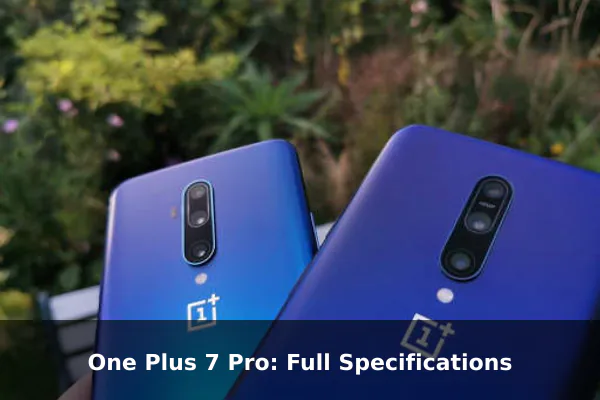
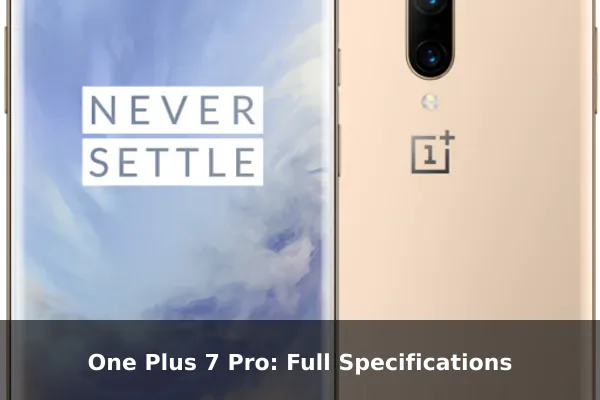
Color options included Mirror Grey, Almond, and Nebula Blue, with the latter’s frosted finish becoming a fan favorite. This is the kind of device where a lifestyle image showing the curved screen and rear glass finish helps readers appreciate the design language.
The Fluid AMOLED Display
The standout feature is the 6.67-inch Fluid AMOLED panel with a 1440 x 3120 resolution, roughly 516 ppi, and a 90Hz refresh rate. In 2019 a 90Hz QHD+ screen was rare, and it made scrolling and animations feel noticeably smoother than the 60Hz panels on most rivals. HDR10+ support and an ~88.1% screen-to-body ratio round out a display that was widely praised at launch.
Measured peak brightness landed around 616 nits, which is comfortable indoors and usable outdoors, though it falls short of the very brightest panels released in later years. For media and gaming, this remains one of the phone’s strongest assets.
Performance: Snapdragon 855 and UFS 3.0
Power comes from Qualcomm’s 7 nm Snapdragon 855, an octa-core chip pairing a 2.84 GHz prime core with three performance and four efficiency cores, alongside the Adreno 640 GPU. Crucially, the OnePlus 7 Pro was among the first phones to ship with UFS 3.0 storage, which sharply improved app loading and file transfer speeds.
Benchmark results reflected its flagship status, with AnTuTu scores around 364,000 (v7) at the time. Combined with OnePlus’s lightweight software, the result is a phone that still feels fast for everyday tasks, social apps, and most games, even if newer titles will push the aging GPU harder.
Cameras: A Serious Step Up
This was OnePlus’s first genuinely competitive camera system. The triple rear setup combines a 48 MP f/1.6 main sensor with optical image stabilization, an 8 MP 3x telephoto, and a 16 MP ultrawide. That trio finally gave OnePlus the framing flexibility found on rival flagships, supported by laser autofocus and a dual-LED flash.
Video tops out at 4K 60fps, with high-speed 1080p and 720p slow-motion modes. The selfie camera is the headline trick: a motorized 16 MP pop-up module that keeps the front of the phone completely uninterrupted. It is elegant, though the moving mechanism is a consideration for long-term durability.
Battery and Charging
A 4000 mAh battery keeps the large, high-resolution display fed, earning a solid endurance rating of around 85 hours in testing. Day-long use is realistic for most people, though running the display at full QHD+ and 90Hz simultaneously will shorten that.
Charging is handled by 30W wired fast charging (Warp Charge), which refills the battery quickly, though there is no wireless charging on this model. A battery or charging-focused image can help illustrate this practical strength.
Software and Updates
The phone launched on Android 9.0 (Pie) with OxygenOS, long considered one of the cleanest and fastest Android skins. It was later upgradable to Android 12 with OxygenOS 12.1. Buyers today should be aware that official major updates have ended, so the OnePlus 7 Pro is best viewed as a capable device that will not receive the latest Android versions or long-term security patches.
Connectivity and Extras

Connectivity is comprehensive for its generation: Wi-Fi 5 (dual-band), Bluetooth 5.0 with aptX HD, NFC, and USB Type-C 3.1 with OTG. Positioning support spans GPS (L1+L5), GLONASS, BeiDou, and Galileo. An under-display optical fingerprint sensor handles biometrics, and stereo speakers improve the media experience. Note the absence of a 3.5mm headphone jack, a microSD slot, and any radio, with multiple regional models (such as GM1911 and GM1913) covering global and North American bands.
Who Should Buy the OnePlus 7 Pro
Today, the OnePlus 7 Pro suits buyers seeking an affordable, used flagship with a premium screen and dependable performance, rather than those needing the newest software or 5G. Its 90Hz Fluid AMOLED display, fast Snapdragon 855 platform, and clean design remain genuinely appealing for media, browsing, and gaming on a budget.
Conclusion
The OnePlus 7 Pro was a landmark device that proved OnePlus could build a true flagship, combining a stunning 90Hz Fluid AMOLED screen, fast Snapdragon 855 hardware, UFS 3.0 storage, and a clever pop-up selfie camera. Its main limitations today are the lack of 5G, no wireless charging, and the end of official software updates. If you want a stylish, high-performance phone on a tight budget and can accept an older Android version, a well-kept OnePlus 7 Pro still represents excellent value; buyers needing long-term updates or future-proof connectivity should look to a newer model.
References
- OnePlus official product/specification pages (oneplus.com) – Primary manufacturer source for the OnePlus 7 Pro name, variants, dimensions, display, cameras, RAM/storage, battery, charging, colors, and launch positioning.
- GSMArena OnePlus 7 Pro specifications – Well-known structured phone-spec reference useful for cross-checking hardware details, network bands, dimensions, camera specs, battery, and variant information.
- Qualcomm Snapdragon 855 Mobile Platform – Primary chipset manufacturer source for Snapdragon 855 CPU, GPU, modem/connectivity, process node, and platform capabilities used by the OnePlus 7 Pro.
- FCC Equipment Authorization (fcc.gov) – Official regulatory source for confirming US model identifiers, wireless radio approvals, SAR/compliance documents, and supported transmission details for applicable OnePlus 7 Pro variants.
