
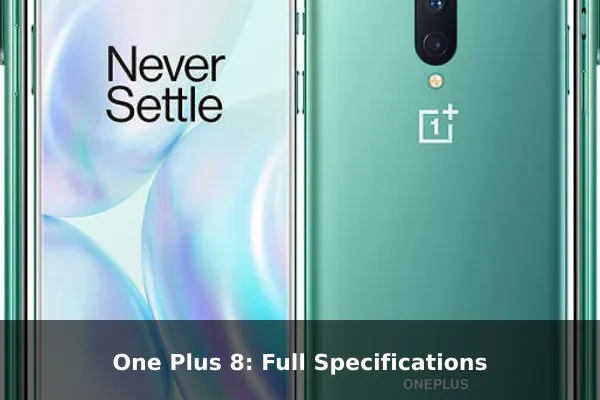
The One Plus 8 arrived in April 2020 as the company’s more accessible flagship, sitting below the larger 8 Pro while still packing Qualcomm’s top-tier Snapdragon 865 5G platform. It marked One Plus’s push into mainstream 5G with a lightweight, curved-glass design and the fast, clean software the brand built its reputation on.
With a 6.55-inch 90Hz Fluid AMOLED display, a versatile 48 MP triple camera, and 30W Warp Charge, the One Plus 8 was engineered to feel every bit as premium as pricier rivals while undercutting them on price. This article breaks down what that hardware means in daily use and where the phone still makes sense today.
Full Specifications
Network
| Technology: | GSM / CDMA / HSPA / LTE / 5G |
| 2G bands: | GSM 850 / 900 / 1800 / 1900 |
| CDMA 800 / 1900 & TD-SCDMA | |
| 3G bands: | HSDPA 800 / 850 / 900 / 1700(AWS) / 1800 / 1900 / 2100 |
| 4G bands: | 1, 2, 3, 4, 5, 7, 8, 12, 13, 17, 18, 19, 20, 25, 26, 28, 32, 34, 38, 39, 40, 41, 42, 46, 66 – EU |
| 1, 2, 3, 4, 5, 7, 8, 12, 13, 17, 18, 19, 20, 25, 26, 28, 29, 30, 34, 38, 39, 40, 41, 46, 48, 66, 71 – NA | |
| 1, 2, 3, 4, 5, 7, 8, 12, 17, 18, 19, 20, 26, 34, 38, 39, 40, 41, 46 – IN | |
| 1, 2, 3, 4, 5, 7, 8, 12, 17, 18, 19, 20, 26, 34, 38, 39, 40, 41 – CN | |
| 5G bands: | 1, 3, 7, 28, 78 SA/NSA – EU |
| 2, 5, 41, 66, 71 SA/NSA – NA | |
| 78 SA/NSA – IN | |
| 41, 78, 79 SA/NSA – CN | |
| Speed: | HSPA 42.2/5.76 Mbps, LTE (5CA) Cat18 1200/150 Mbps, 5G 7.5 Gbps DL |
Launch
| Announced: | 2020, April 14 |
| Status: | Available. Released 2020, April 21 |
Body
| Dimensions: | 160.2 x 72.9 x 8 mm (6.31 x 2.87 x 0.31 in) |
| Weight: | 180 g (6.35 oz) |
| Build: | Glass front (Gorilla Glass 5), glass back (Gorilla Glass 5), aluminum frame |
| SIM: | Nano-SIM + Nano-SIM |
Display
| Type: | Fluid AMOLED, 90Hz, HDR10+ |
| Size: | 6.55 inches, 103.6 cm2 (~88.7% screen-to-body ratio) |
| Resolution: | 1080 x 2400 pixels, 20:9 ratio (~402 ppi density) |
| Protection: | Corning Gorilla Glass 5 |
Platform
| OS: | Android 10, upgradable to Android 13, OxygenOS 13 |
| Chipset: | Qualcomm SM8250 Snapdragon 865 5G (7 nm+) |
| CPU: | Octa-core (1×2.84 GHz Cortex-A77 & 3×2.42 GHz Cortex-A77 & 4×1.80 GHz Cortex-A55) |
| GPU: | Adreno 650 |
Memory
| Card slot: | No |
| Internal: | 128GB 6GB RAM, 128GB 8GB RAM, 256GB 12GB RAM |
| UFS 3.0, 2-LANE |
Main Camera
| Triple: | 48 MP, f/1.8, 26mm (wide), 1/2.0″, 0.8µm, PDAF, OIS 16 MP, f/2.2, 14mm, 116˚ (ultrawide), 1/3.6″, 1.0µm 2 MP, f/2.4, (macro) |
| Features: | Dual-LED flash, HDR, panorama |
| Video: | 4K@30/60fps, 1080p@30/60/240fps, Auto HDR, gyro-EIS |
Selfie camera
| Single: | 16 MP, f/2.4, (wide), 1/3.06″, 1.0µm |
| Features: | HDR |
| Video: | 1080p@30fps, gyro-EIS |
Sound
| Loudspeaker: | Yes, with stereo speakers |
| 3.5mm jack: | No |
Comms
| WLAN: | Wi-Fi 802.11 a/b/g/n/ac/6, dual-band, Wi-Fi Direct, DLNA |
| Bluetooth: | 5.1, A2DP, LE, aptX HD |
| Positioning: | GPS (L1+L5), GLONASS (G1), BDS (B1), GALILEO (E1+E5a) |
| NFC: | Yes |
| Radio: | No |
| USB: | USB Type-C 3.1, OTG |
Features
| Sensors: | Fingerprint (under display, optical), accelerometer, gyro, proximity, compass |
Battery
| Type: | Li-Po 4300 mAh |
| Charging: | 30W wired, 50% in 22 min |
Misc
| Colors: | Onyx Black, Glacial Green, Interstellar Glow, Polar Silver |
| Models: | IN2013, IN2017, IN2010, IN2019, IN2011 |
| Price: | About 840 EUR |
Our Tests
| Performance: | AnTuTu: 564708 (v8) GeekBench: 13291 (v4.4), 3399 (v5.1) GFXBench: 46fps (ES 3.1 onscreen) |
| Display: | 803 nits max brightness (measured) |
| Camera: | Photo / Video |
| Loudspeaker: | -22.5 LUFS (Excellent) |
| Battery (old): | Endurance rating 108h |
Price and Availability
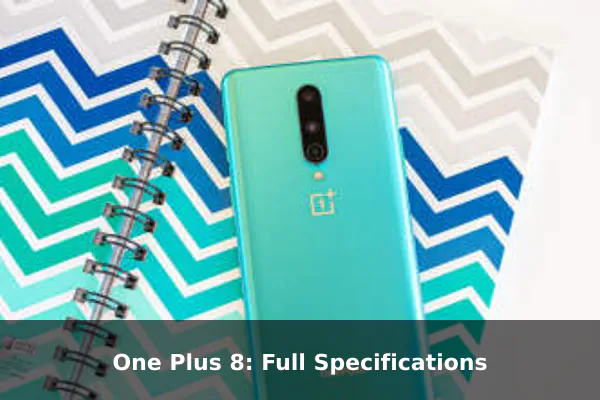
The One Plus 8 offers a compelling combination of features and performance. While the base price is around €840, the actual cost may vary depending on your location and retailer. Below, you’ll find the approximate price of the One Plus 8 converted into various currencies. Please note that these are estimates based on recent exchange rates as of July 4, 2026 and may not reflect the exact price you’ll find at a retailer.
- United States: $961
- Japan: ¥154,977
- United Kingdom: £720
- Australia: A$1,385
- Canada: C$1,364
- Taiwan: NT$30,686
- Denmark: kr6.269
- Saudi Arabia: ﷼3,603
- South Korea: ₩1,472,608
- Germany: €840
- Brazil: R$4.988
- Vietnam: ₫24.997.781
- Kenya: KSh 124,140
- India: ₹91,563
- Indonesia: Rp 17.263.881
- Nigeria: ₦1,303,969
- Pakistan: ₨267,026
- Philippines: ₱59,045
- Bangladesh: ৳১,১৮,৪৩৯
Why the One Plus 8 Still Makes Sense
Launched at around 840 EUR, the One Plus 8 was positioned as a flagship that trimmed the extras rather than the essentials. You get the same Snapdragon 865 chip found in far more expensive 2020 phones, a high-refresh AMOLED panel, and 5G connectivity, without a curved quad-camera array or wireless charging inflating the cost. For buyers who value raw speed and a polished experience over spec-sheet completeness, that trade-off remains compelling on the second-hand market. It is a clear step up from mid-range One Plus Nord models while staying more affordable than the flagship 8 Pro.
Design and Build Quality
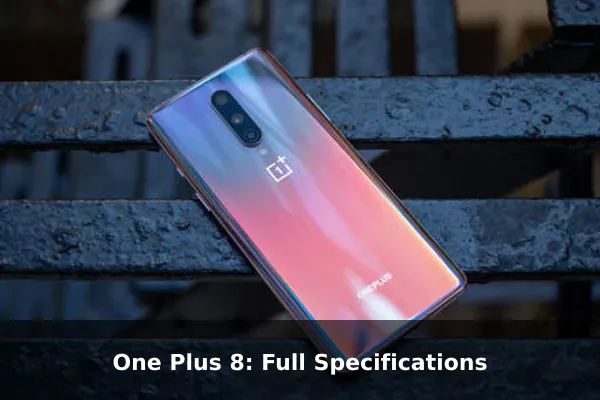
At 160.2 x 72.9 x 8 mm and just 180 g, the One Plus 8 is noticeably lighter and more compact than most 2020 flagships. The sandwich of Gorilla Glass 5 front and back around an aluminum frame gives it a genuinely premium feel, while the subtly curved edges make one-handed use comfortable. Color options such as Onyx Black, Glacial Green, Interstellar Glow, and Polar Silver lean elegant rather than flashy. There is no official IP rating on most variants and no 3.5mm headphone jack, which are the main concessions to the price and slim profile.
Display Experience
The 6.55-inch Fluid AMOLED screen is a highlight. Its 90Hz refresh rate keeps scrolling and animations fluid, and the 1080 x 2400 resolution (about 402 ppi) is sharp for everyday content. HDR10+ support and measured peak brightness of roughly 803 nits mean streaming and outdoor visibility hold up well. A slim punch-hole camera and an 88.7% screen-to-body ratio keep the front largely uninterrupted. While the 8 Pro pushed to a QHD 120Hz panel, this display strikes a sensible balance between smoothness, sharpness, and battery efficiency.
Performance and Gaming
The Snapdragon 865 5G paired with up to 12GB of RAM and fast UFS 3.0 storage makes the One Plus 8 a strong performer even years after release. Benchmark figures back this up, with AnTuTu scores around 564,000 and smooth GFXBench results near 46fps, translating to responsive multitasking and capable gaming at high settings. The octa-core CPU, led by a 2.84 GHz Cortex-A77 core, and the Adreno 650 GPU handle demanding titles comfortably. For most users this chip still delivers flagship-class day-to-day speed.
Camera Capability
The rear triple camera is led by a 48 MP f/1.8 main sensor with optical image stabilization, backed by a 16 MP 116-degree ultrawide and a 2 MP macro lens. In good light the primary camera produces detailed, well-balanced shots, and OIS helps with steadier low-light and video capture. Video tops out at 4K 60fps with gyro-EIS for smooth handheld footage, while the 16 MP front camera covers selfies and 1080p video. The macro lens is more of a novelty, so the real strength lies in the reliable main-and-ultrawide pairing.
Battery and Charging
A 4300 mAh battery is enough to comfortably see most users through a full day, aided by the efficient 7 nm+ chipset and adaptive refresh handling. The endurance rating of around 108 hours reflects solid all-round longevity. One Plus’s 30W Warp Charge is the standout here, refilling roughly 50% in about 22 minutes, so short top-ups go a long way. There is no wireless charging on this model, but the fast wired speeds make that easier to overlook.
Software and Connectivity
The One Plus 8 shipped with Android 10 and is upgradable to Android 13 with OxygenOS 13, an interface long praised for being fast, clean, and close to stock. Connectivity is thorough for its era: dual-band Wi-Fi with Wi-Fi 6 support, Bluetooth 5.1 with aptX HD, NFC, and USB Type-C 3.1. Multi-band 5G (SA/NSA) coverage varies by regional model, so buyers should confirm the specific variant matches local network bands. Stereo speakers rated at an excellent -22.5 LUFS round out a well-equipped media package.
Who Should Buy It
The One Plus 8 suits anyone wanting flagship-grade speed, a smooth 90Hz AMOLED display, and fast charging without paying full flagship prices. It is a smart pick for gamers, heavy multitaskers, and fans of clean software who can live without wireless charging, a headphone jack, or a formal water-resistance rating. Shoppers who prioritize telephoto zoom or the latest software support may prefer a newer One Plus model instead.
Conclusion
The One Plus 8 remains a well-rounded flagship-lite package that ages gracefully thanks to its Snapdragon 865 power, fluid 90Hz AMOLED screen, and speedy 30W Warp Charge. Its omissions are deliberate rather than careless, keeping the value proposition strong. If you want a fast, lightweight, and clean-software phone at a sensible price, the One Plus 8 is an easy recommendation, especially for buyers who don’t need wireless charging or a dedicated zoom lens.
References
- OnePlus 8 Specs – OnePlus Global – Primary manufacturer source for OnePlus 8 hardware specifications, including display, dimensions, performance, cameras, sensors, battery, charging, and network details.
- Qualcomm Snapdragon 865 5G Mobile Platform – Official chipset source to verify the Snapdragon 865 platform used by the OnePlus 8 and its CPU, GPU, modem, connectivity, and performance capabilities.
- GSMArena OnePlus 8 Full Phone Specifications – Well-known smartphone specifications database useful for cross-checking dimensions, display, camera, memory, battery, bands, and release information against the official OnePlus page.
- FCC Equipment Authorization System – Official U.S. regulatory database useful for verifying device authorization, model identifiers, wireless radios, SAR, and certification documents for U.S. variants if those details are included.
