
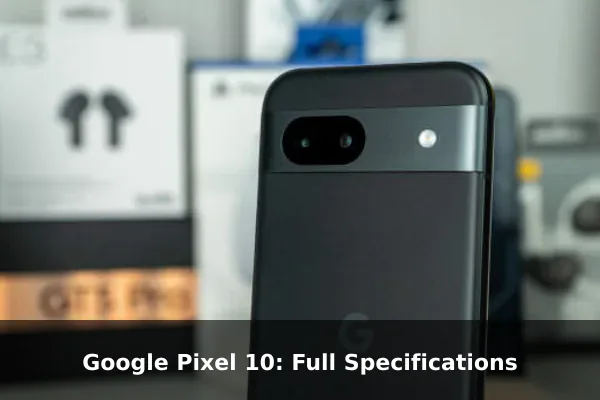
The Google Pixel 10 is positioned as the standard model in Google’s tenth-generation Pixel family, but its spec sheet reads more like a compact flagship than a stripped-down entry point. It combines Tensor G5 silicon, a bright 6.3-inch OLED display, a triple rear camera system, and long Android update support in a size that should appeal to users who do not want an oversized phone.
For buyers comparing it with older Pixels, Samsung Galaxy S models, OnePlus flagships, or iPhones, the Pixel 10’s main pitch is balance. It focuses on practical camera reach, clean Android software, durable materials, and useful connectivity rather than chasing the biggest screen or the fastest charging number.
Full Specifications
Network
| Technology: | GSM / HSPA / LTE / 5G |
| 2G bands: | GSM 850 / 900 / 1800 / 1900 |
| 3G bands: | HSDPA 800 / 850 / 900 / 1700(AWS) / 1900 / 2100 |
| 4G bands: | LTE |
| 5G bands: | SA/NSA/Sub6/mmWave – USA |
| SA/NSA/Sub6 – ROW | |
| Speed: | HSPA, LTE (CA), 5G |
Launch
| Announced: | Not announced yet |
| Status: | Rumored |
Body
| Dimensions: | – |
| Weight: | – |
| Build: | Glass front (Gorilla Glass Victus 2), glass back (Gorilla Glass Victus 2), aluminum frame |
| SIM: | Nano-SIM + eSIM |
| IP68/IP69 dust tight and water resistant (immersible up to 1.5m for 30 min) |
Display
| Type: | LTPO OLED, 120Hz, HDR10+, 2000 nits (HBM), 3000 nits (peak) |
| Size: | 6.3 inches, 95.2 cm2 |
| Resolution: | 1080 x 2424 pixels, 20:9 ratio (~421 ppi density) |
| Protection: | Corning Gorilla Glass Victus 2 |
Platform
| OS: | Android 16, up to 7 major Android upgrades |
| Chipset: | Google Tensor G5 (4 nm) |
| CPU: | Octa-core (1×3.1 GHz Cortex-X4 & 3×2.6 GHz Cortex-A720 & 4×1.92 GHz Cortex-A520) |
| GPU: | Mali-G715 MC7 |
Memory
| Card slot: | No |
| Internal: | 128GB 12GB RAM, 256GB 12GB RAM |
| UFS 3.1 |
Main Camera
| Triple: | 48 MP, f/1.7, 25mm (wide), 1/2.0″, 0.8µm, dual pixel PDAF, OIS 10.8 MP, f/3.1, 112mm (telephoto), 1/3.2″, dual pixel PDAF, OIS, 5x optical zoom 12 MP, (ultrawide), PDAF |
| Features: | Single-zone Laser AF, LED flash, Pixel Shift, Ultra-HDR, panorama, Best Take |
| Video: | 4K@24/30/60fps, 1080p@24/30/60/120/240fps; gyro-EIS, OIS, 10-bit HDR |
Selfie camera
| Single: | 10.5 MP, f/2.2, 20mm (ultrawide), 1/3.1″, 1.22µm, PDAF |
| Features: | HDR, panorama |
| Video: | 4K@30/60fps, 1080p@30/60fps |
Sound
| Loudspeaker: | Yes, with stereo speakers |
| 3.5mm jack: | No |
Comms
| WLAN: | Wi-Fi 802.11 a/b/g/n/ac/6e, dual-band |
| Bluetooth: | 5.4, A2DP, LE, aptX HD |
| Positioning: | GPS (L1+L5), GLONASS, GALILEO, BDS, QZSS, NavIC |
| NFC: | Yes |
| Radio: | No |
| USB: | USB Type-C 3.2 |
Features
| Sensors: | Fingerprint (under display, ultrasonic), accelerometer, gyro, proximity, compass, barometer |
| Satellite SOS service Circle to Search |
Battery
| Type: | Li-Ion 4970 mAh |
| Charging: | 29W wired, PD3.0, PPS 15W wireless (w/ Pixel Stand) 12W wireless (w/ Qi compatible charger) Reverse wireless Bypass charging |
Misc
| Colors: | Pink; other colors |
Value Positioning
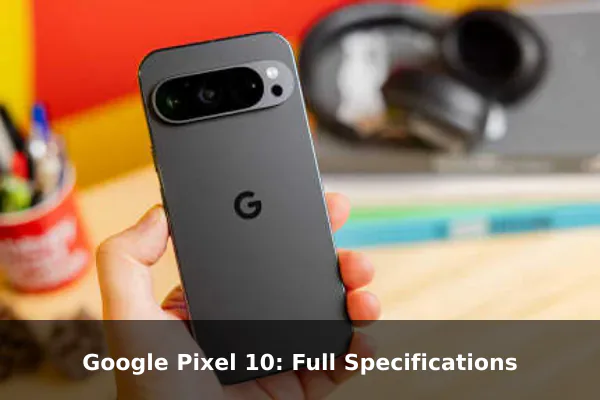
The Pixel 10 is best understood as Google’s mainstream flagship choice. It is not the Pro model, so it avoids the most premium camera and display positioning, yet the core package still includes a modern Tensor G5 chipset, 12GB of RAM, 5G support, wireless charging, and a full triple-camera layout. That makes it more compelling than a basic phone and more approachable than an ultra-premium device.
The source data does not provide an exact price, so value should be judged by configuration, regional availability, and launch-market pricing when the buying page is checked. The strongest value argument is that Google includes features many brands reserve for higher tiers, especially the telephoto camera, ultrasonic fingerprint reader, high-brightness OLED panel, and long software support promise.
Design and Durability
The Pixel 10 keeps Google’s familiar camera-bar identity while using a premium material mix. The listed build includes Gorilla Glass Victus 2 on the front and back with an aluminum frame, which places it in proper flagship territory for scratch resistance and overall feel. The size is also important: a 6.3-inch display makes the phone easier to handle than larger flagship models while still leaving enough room for media, maps, messaging, and editing photos.
Water and dust resistance are part of the appeal, although durability ratings should always be treated as protection against accidents rather than an invitation to expose the phone to water. The Nano-SIM and eSIM arrangement is practical for travel and carrier switching, and the presence of satellite SOS in the feature list adds a useful emergency-focused layer where the service is supported.
Display Experience
The display is one of the Pixel 10’s clearest strengths. The 6.3-inch LTPO OLED panel supports a 120Hz refresh rate, HDR10+, and very high brightness figures, including 2000 nits high-brightness mode and 3000 nits peak brightness in the supplied specification set. In everyday use, that combination matters more than raw resolution alone because it helps the screen stay readable outdoors while keeping scrolling and animations smooth.
The 1080 x 2424 resolution gives a sharp density of around 421 pixels per inch, which is more than enough for text, photos, and streaming. The 20:9 aspect ratio also keeps the phone narrow enough for one-handed use compared with wider large-screen models. Buyers who mainly watch video, browse social feeds, and use navigation should find this panel a strong match.
Performance and Storage
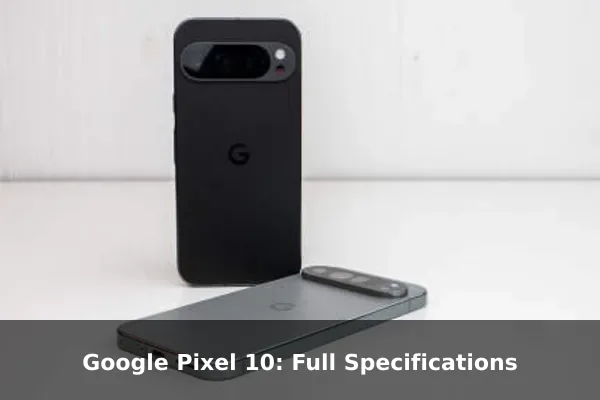
The Google Tensor G5 is the performance center of the Pixel 10. Based on the supplied data, it uses a 4 nm process and an octa-core CPU led by a Cortex-X4 prime core, supported by Cortex-A720 and Cortex-A520 cores. That points to a phone designed for fast daily use, AI-assisted features, camera processing, and multitasking rather than only benchmark scores.
The 12GB RAM allocation is generous for a non-Pro Pixel and should help with app switching, camera processing, and long-term usability. Storage options are listed as 128GB and 256GB with UFS 3.1, but there is no microSD card slot. Users who shoot a lot of 4K video or keep large offline media libraries should consider the higher storage variant from the start.
Camera System
The Pixel 10’s rear camera setup is especially interesting because it includes a wide camera, a telephoto camera with 5x optical zoom, and an ultrawide camera. That gives the standard model a more flexible shooting range than many base flagships, which often skip true optical zoom. The main 48MP camera includes optical image stabilization, while the telephoto camera also adds OIS and dual pixel autofocus for steadier long-range shots.
Pixel camera value has traditionally come from processing as much as hardware, and the listed feature set reflects that approach. Pixel Shift, Ultra-HDR, Best Take, panorama, laser autofocus, gyro-EIS, OIS, and 10-bit HDR video support all point toward a camera designed for reliable everyday results. The selfie camera also supports autofocus and 4K video, which is useful for video calls, vlogging, and social content.
Battery and Charging
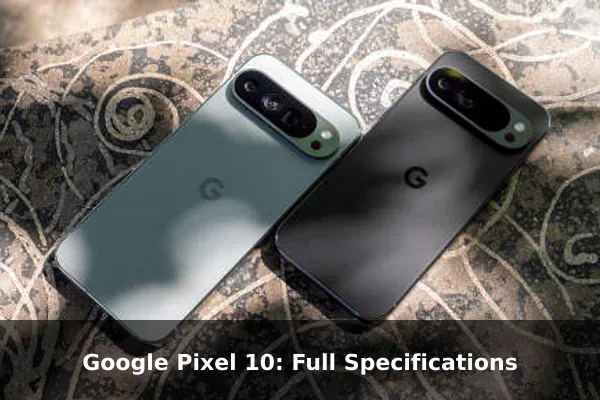
The Pixel 10 is listed with a 4970 mAh battery, a healthy capacity for a phone in this size class. Battery life will still depend on brightness, 5G use, gaming, camera recording, and background apps, but the combination of LTPO display technology and Google’s own chipset should give the phone a solid foundation for all-day use.
Charging support includes 29W wired charging with PD3.0 and PPS, wireless charging with higher speeds on Pixel Stand, standard Qi wireless charging, reverse wireless charging, and bypass charging. The wired charging speed is not the fastest in the Android world, but the overall charging feature set is broad. Reverse wireless charging is especially useful for earbuds or small accessories in a pinch.
Software and Long-Term Support
The software story is one of the best reasons to consider the Pixel 10. The supplied data lists Android 16 and up to seven major Android upgrades, which gives the phone a long ownership runway. For buyers who keep a phone for four, five, or even more years, update policy can be just as important as the camera or processor.
Pixel phones also tend to receive Google’s newest Android features early, including search, calling, safety, translation, and AI-assisted tools. Circle to Search is listed, and Google’s official Pixel update documentation is the right place to verify the exact support window and update categories. This makes the Pixel 10 a strong option for users who want a clean Android experience without waiting on heavily customized skins.
Connectivity and Everyday Features
The Pixel 10 is built for broad network use, with GSM, HSPA, LTE, and 5G listed. The source data separates US support with Sub-6 and mmWave from other regions with Sub-6, so buyers should check the exact regional model before importing. This is especially important for people who rely on specific 5G bands or travel between markets.
Other connectivity features include Wi-Fi 6E, Bluetooth, NFC, USB Type-C 3.2, and multi-constellation positioning with GPS, GLONASS, Galileo, BDS, QZSS, and NavIC. Stereo speakers are included, but there is no 3.5mm headphone jack. The ultrasonic under-display fingerprint sensor is another welcome flagship-grade touch, especially for users who prefer fingerprint unlocking over face-based methods.
Who Should Buy the Pixel 10?
The Pixel 10 makes the most sense for buyers who want a compact Android flagship with strong cameras, clean software, long updates, and Google’s AI-forward feature direction. It is also a good upgrade target for Pixel 7, Pixel 8, or older Android users who want better zoom flexibility, a brighter screen, and a longer support window.
It may not be the first choice for shoppers who need the fastest charging, expandable storage, a headphone jack, or the largest possible display. Power users who want the very best Pixel camera hardware should also compare it with the Pro models. For most mainstream flagship buyers, however, the Pixel 10 looks like the practical middle ground: powerful, polished, and easier to live with than many oversized alternatives.
Conclusion
The Google Pixel 10 stands out as a balanced flagship with a bright OLED screen, Tensor G5 performance, versatile triple cameras, wireless charging, 5G, and long Android support. If you want a compact premium Android phone with strong software and camera value, the Pixel 10 is easy to recommend.
References
- Google Pixel Phone Hardware Tech Specs – Official Google support page with detailed Pixel 10 hardware specifications, including display, dimensions, battery, memory, storage, processor, cameras, connectivity, and materials.
- Google Store Pixel 10 Product Page – Official product page for Pixel 10 with current marketed specifications, configurations, colors, features, pricing context, and availability details.
- Google Blog: Pixel 10, Pixel 10 Pro and Pro XL Specs, Design, Price – Official launch article from Google covering Pixel 10 series announcements, design changes, Tensor G5, camera upgrades, update promise, and feature highlights.
- Google Pixel 10 Safety & Regulatory Guide – Official safety and regulatory reference for Pixel 10, Pixel 10 Pro, and Pixel 10 Pro XL, useful for model numbers, FCC compliance, radio restrictions, hearing-aid compatibility, and EU conformity details.
- Google Pixel Software Update Support – Official Google support page for Pixel OS, security, and Pixel Drop update timelines, useful for verifying long-term software support claims.
