
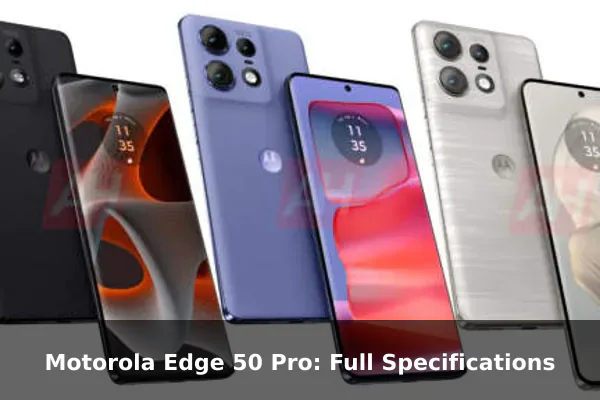
The Motorola Edge 50 Pro is a 2024 upper-midrange Android phone built around a premium-feeling mix of a curved P-OLED display, fast charging, a proper triple-camera system, and broad 5G connectivity. It is not positioned as Motorola’s most powerful flagship, but its specification sheet clearly aims above the ordinary midrange tier.
Its strongest identity is balance: a sharp 144Hz screen, Snapdragon 7 Gen 3 performance, IP68 protection, 125W wired charging, 50W wireless charging, and a 3x telephoto camera in a slim 186 g body. That makes it most interesting for buyers who care about comfort, display quality, and charging speed as much as raw benchmark numbers.
Full Specifications
Network
| Technology: | GSM / HSPA / LTE / 5G |
| 2G bands: | GSM 850 / 900 / 1800 / 1900 |
| 3G bands: | HSDPA 850 / 900 / 1700(AWS) / 1900 / 2100 |
| 4G bands: | 1, 2, 3, 4, 5, 7, 8, 12, 13, 17, 18, 19, 20, 26, 28, 32, 38, 39, 40, 41, 43, 48, 66 |
| 5G bands: | 1, 2, 3, 5, 7, 8, 20, 26, 28, 38, 40, 41, 66, 77, 78 SA/NSA/Sub6 |
| Speed: | HSPA, LTE (CA), 5G |
Launch
| Announced: | 2024, April 03 |
| Status: | Available. Released 2024, April 08 |
Body
| Dimensions: | 161.2 x 72.4 x 8.2 mm (6.35 x 2.85 x 0.32 in) |
| Weight: | 186 g (6.56 oz) |
| Build: | Glass front, plastic back or silicone polymer back (eco leather), aluminum frame |
| SIM: | Nano-SIM + eSIMNano-SIM + Nano-SIM |
| IP68 dust tight and water resistant (immersible up to 1.5m for 30 min) |
Display
| Type: | P-OLED, 1B colors, 144Hz, HDR10+, 2000 nits (peak) |
| Size: | 6.7 inches, 107.4 cm2 (~92.0% screen-to-body ratio) |
| Resolution: | 1220 x 2712 pixels, 20:9 ratio (~446 ppi density) |
| Protection: | Corning Gorilla Glass (unspecified version) |
Platform
| OS: | Android 14, up to 3 major Android upgrades |
| Chipset: | Qualcomm SM7550-AB Snapdragon 7 Gen 3 (4 nm) |
| CPU: | Octa-core (1×2.63 GHz Cortex-A715 & 4×2.4 GHz Cortex-A715 & 3×1.8 GHz Cortex-A510) |
| GPU: | Adreno 720 |
Memory
| Card slot: | No |
| Internal: | 128GB 8GB RAM, 256GB 8GB RAM, 256GB 12GB RAM, 512GB 12GB RAM |
| UFS 2.2 |
Main Camera
| Triple: | 50 MP, f/1.4, 25mm (wide), 1/1.55″, 1.0µm, multi-directional PDAF, OIS 10 MP, f/2.0, 67mm (telephoto), 1/3.94″, 1.0µm, PDAF, OIS, 3x optical zoom 13 MP, f/2.2, 16mm, 120˚ (ultrawide), 1/3.0″, 1.12µm, PDAF |
| Features: | Laser AF, LED flash, panorama, HDR |
| Video: | 4K@30fps, 1080p@30/60/120/240fps, 10-bit HDR10+, gyro-EIS |
Selfie camera
| Single: | 50 MP, f/1.9, 21mm (wide), 0.64µm, AF |
| Features: | HDR |
| Video: | 4K@30fps, 1080p@30/60fps |
Sound
| Loudspeaker: | Yes, with stereo speakers |
| 3.5mm jack: | No |
| Snapdragon Sound |
Comms
| WLAN: | Wi-Fi 802.11 a/b/g/n/ac/6e, tri-band, Wi-Fi Direct |
| Bluetooth: | 5.4, A2DP, LE |
| Positioning: | GPS, GLONASS, GALILEO, BDS, QZSS, NavIC |
| NFC: | Yes |
| Radio: | No |
| USB: | USB Type-C 3.1, OTG, DisplayPort 1.4 |
Features
| Sensors: | Fingerprint (under display, optical), accelerometer, gyro, proximity, compass |
| Smart Connect (Ready For) support |
Battery
| Type: | Li-Po 4500 mAh |
| Charging: | 125W wired, 100% in 18 min 50W wireless 10W reverse wireless |
Misc
| Colors: | Luxe Lavender, Black Beauty, Moonlight Pearl, Vanilla Cream |
| Models: | XT2403-2 |
| SAR: | 1.08 W/kg (head) 1.08 W/kg (body) |
| Price: | € 395.06 / $ 499.00 / £ 296.37 / ₹ 27,483 |
Our Tests
| Performance: | AnTuTu: 842798 (v10) GeekBench: 3083 (v6) 3DMark: 1477 (Wild Life Extreme) |
| Display: | 1295 nits max brightness (measured) |
| Loudspeaker: | -24.6 LUFS (Very good) |
| Battery: | Active use score 11:59h |
Price and Availability
The Motorola Edge 50 Pro offers a compelling combination of features and performance. While the base price is around €395, the actual cost may vary depending on your location and retailer. Below, you’ll find the approximate price of the Motorola Edge 50 Pro converted into various currencies. Please note that these are estimates based on recent exchange rates as of October 8, 2026 and may not reflect the exact price you’ll find at a retailer.
- United States: $442
- Japan: ¥69,910
- United Kingdom: £335
- Australia: A$636
- Canada: C$631
- Taiwan: NT$14,100
- Denmark: kr2.953
- Saudi Arabia: ﷼1,659
- South Korea: ₩592,452
- Germany: €395
- Brazil: R$2.212
- Vietnam: ₫11.494.360
- Kenya: KSh 58,036
- India: ₹42,772
- Indonesia: Rp 7.895.663
- Nigeria: ₦597,236
- Pakistan: ₨122,614
- Philippines: ₱27,743
- Bangladesh: ৳৫৪,৩৬৫
Value Position
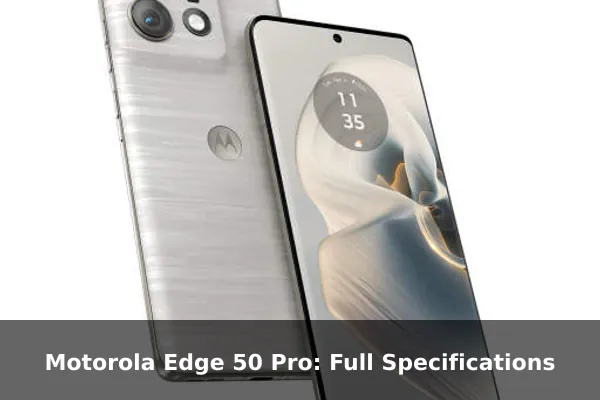
The Motorola Edge 50 Pro sits in a useful space between mainstream midrange phones and more expensive flagship models. Its raw price data places it around €395.06, $499.00, £296.37, or ₹27,483, though actual retail pricing can vary sharply by country, storage configuration, taxes, and bundle. At that level, the headline value comes from features that are still not universal in this segment: IP68 water resistance, a curved high-resolution OLED panel, wireless charging, reverse wireless charging, USB-C DisplayPort output, and a real telephoto camera.
This is also where the phone differs from simpler Edge-series models. The Edge 50 Pro is not just a larger battery phone or a fashion-focused device; it is a more complete productivity and media handset. The trade-off is clear, though: Snapdragon 7 Gen 3 is efficient and modern, but it is not a flagship-class Snapdragon 8-series chip. Buyers should treat the Edge 50 Pro as a polished premium midrange phone rather than a gaming flagship in disguise.
Design And Durability
Motorola gives the Edge 50 Pro a slim, curved profile with dimensions of 161.2 x 72.4 x 8.2 mm and a manageable 186 g weight. The aluminum frame helps it feel more premium than plastic-framed alternatives, while the back material varies between plastic and silicone polymer eco leather depending on color and market. Luxe Lavender, Black Beauty, Moonlight Pearl, and Vanilla Cream give the phone a softer style than many performance-first Android models.
The IP68 rating is one of the most important practical details. It means the phone is dust tight and rated for immersion up to 1.5 meters for 30 minutes under specified test conditions. That does not make it invincible, but it does make the Edge 50 Pro easier to recommend for daily commuting, travel, and outdoor use. SIM support is also market-dependent, with configurations listed for Nano-SIM plus eSIM or dual Nano-SIM.
Display Quality
The 6.7-inch P-OLED display is one of the phone’s main reasons to exist. It combines a 1220 x 2712 resolution, roughly 446 ppi density, 1 billion colors, HDR10+ support, and a 144Hz refresh rate. That gives the Edge 50 Pro a sharper and smoother screen than many phones that stop at 1080p and 120Hz. The quoted 2000-nit peak brightness is useful for HDR highlights and difficult lighting, while the measured 1295-nit maximum brightness from lab testing suggests strong real-world readability.
The curved-edge format will appeal to users who like an immersive look, but it may not suit everyone. Curved screens can be more exposed at the edges and may need careful case selection. Still, for streaming, browsing, maps, and photo review, this is clearly one of the Edge 50 Pro’s best areas.
Performance And Storage
The Snapdragon 7 Gen 3 chipset is built on a 4 nm process and uses an octa-core CPU with Cortex-A715 and Cortex-A510 cores, paired with Adreno 720 graphics. In the supplied test data, the phone scores 842,798 in AnTuTu v10, 3,083 in GeekBench v6, and 1,477 in 3DMark Wild Life Extreme. Those numbers point to strong everyday performance, quick multitasking, and competent casual gaming.
The storage options are practical: 128GB with 8GB RAM, 256GB with 8GB RAM, 256GB with 12GB RAM, and 512GB with 12GB RAM. UFS 2.2 is not the fastest storage standard available in modern Android phones, but it remains adequate for normal app loading and media use. The missing microSD slot matters more. Buyers who shoot a lot of 4K video or store offline media should choose a higher-capacity version from the start.
Camera System
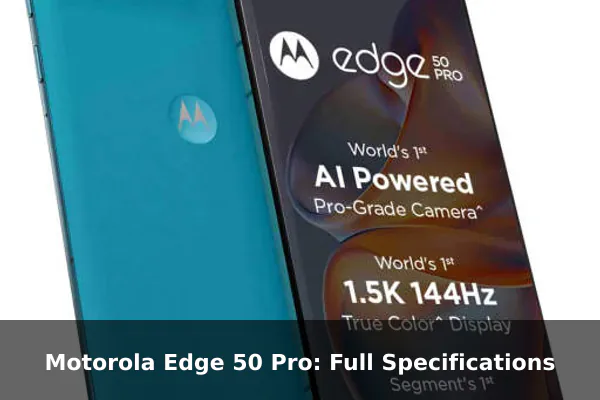
The rear camera setup is more versatile than the usual wide-plus-ultrawide pairing. The 50 MP main camera has a bright f/1.4 aperture, optical image stabilization, laser autofocus, and multi-directional PDAF. That combination is designed to help with low-light capture, subject lock, and handheld stability. The 10 MP telephoto camera adds 3x optical zoom with OIS, while the 13 MP ultrawide covers a 120-degree field of view and includes autofocus.
Video support is solid for the class, with 4K recording at 30fps, 1080p up to 240fps, 10-bit HDR10+, and gyro-EIS. The 50 MP selfie camera is another notable spec because it includes autofocus and can record 4K at 30fps. This camera system is best understood as flexible rather than specialist: it covers portraits, travel, social video, selfies, and zoom better than many phones at similar pricing, but dedicated flagship camera phones can still pull ahead in processing consistency and sensor size.
Battery And Charging
The 4500 mAh battery is not unusually large, so the Edge 50 Pro depends on efficiency and very fast charging to stand out. The supplied active use score of 11:59h is respectable, and the charging package is much more aggressive than average: 125W wired charging, 50W wireless charging, and 10W reverse wireless charging. Motorola’s official materials also note that charging rates and battery life claims depend on conditions, accessories, and depletion level.
For busy users, the charging setup may be more valuable than a larger battery. A quick wired top-up can change the day, and 50W wireless charging is still uncommon outside premium models. The caution is that charger availability may vary by region or retail package, so buyers should check the box contents before assuming the full charging experience is included.
Software Experience
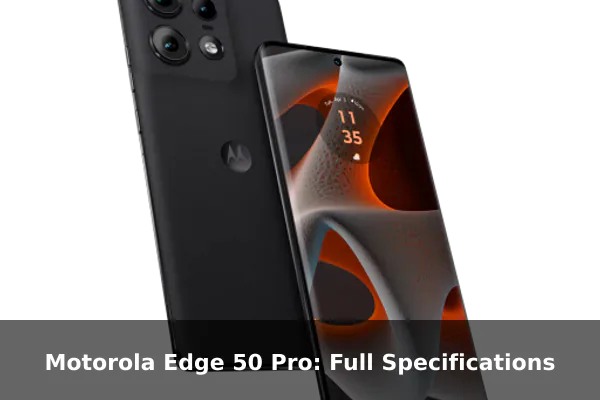
The Edge 50 Pro launched with Android 14 and is listed for up to three major Android upgrades. Motorola’s documentation for the model describes Hello UI based on Android 14, with three years of OS upgrades and four years of security maintenance releases in supported regions. That is a good baseline for a 2024 upper-midrange phone, though it is not the longest update commitment in the Android market.
Motorola’s Smart Connect and Ready For-style features are a genuine advantage for users who want more than phone-only usage. With USB-C 3.1, DisplayPort 1.4, and supported wireless or wired connection modes, the Edge 50 Pro can be useful for external displays, PC-style workflows, file handling, and quick presentations. That productivity angle gives it a different character from phones that focus only on camera or gaming specs.
Connectivity And Audio
Connectivity is broad. The phone supports GSM, HSPA, LTE, and 5G, with sub-6 SA and NSA 5G bands listed. Wi-Fi 6E, tri-band Wi-Fi, Bluetooth 5.4, NFC, USB OTG, and multi-system positioning support are all included. NavIC support is a useful extra for compatible regions, while DisplayPort over USB-C adds a feature many midrange phones omit.
Audio is handled by stereo speakers, and the supplied loudspeaker test result of -24.6 LUFS is rated very good. There is no 3.5 mm headphone jack, so wired audio users will need USB-C or wireless accessories. Snapdragon Sound support is a plus for compatible wireless headphones, especially for users who care about latency and higher-quality Bluetooth audio paths.
Who Should Buy It
The Motorola Edge 50 Pro makes the most sense for buyers who want a premium-feeling Android phone without paying full flagship money. Its best audience includes users who watch a lot of video, want fast charging, care about water resistance, use wireless charging, or need a more flexible camera setup than the usual dual-camera midrange formula.
It is less ideal for buyers who prioritize the fastest possible gaming chipset, expandable storage, a headphone jack, or the longest update policy available. If those points matter most, there are stronger alternatives. But if the goal is a stylish, light, well-equipped Android phone with high-end convenience features, the Edge 50 Pro remains a strong comparison-list candidate.
References
- Motorola Support: moto edge 50 pro specifications
- GSMArena: Motorola Edge 50 Pro review and lab tests
- GSMArena: Motorola Edge 50 Pro specification listing
- Qualcomm: Snapdragon 7 Gen 3 product brief
Conclusion
The Motorola Edge 50 Pro is a well-rounded premium midrange phone with an excellent display, fast wired and wireless charging, IP68 durability, useful desktop-style connectivity, and a versatile camera setup with both telephoto and autofocus ultrawide hardware. Its main limitations are the lack of microSD expansion, no headphone jack, and performance that favors balanced daily use over flagship gaming power. Recommended for buyers who want a polished Android phone with premium conveniences at a more approachable price.
