
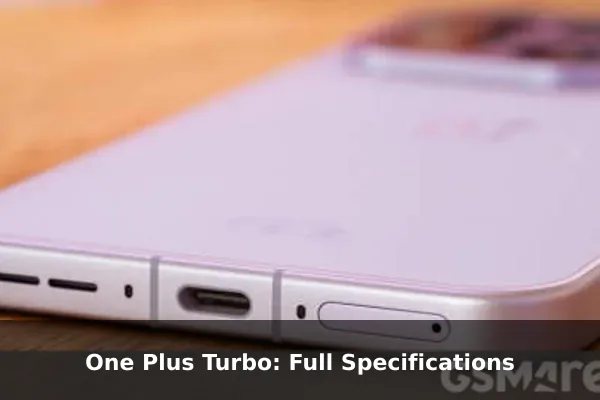
The One Plus Turbo is shaping up to be one of the most talked-about upcoming performance phones, arriving as a rumored addition to the brand’s fast-charging, high-refresh lineup. Built around Qualcomm’s Snapdragon 8 Elite Gen 5 and paired with a massive 8000 mAh battery, it looks positioned to sit alongside aggressive rivals like the Oppo K13 Turbo and the vivo iQOO Z11 Turbo in the enthusiast-friendly mid-to-upper tier.
Because the device is still unannounced, every detail below reflects leaked or provisional specifications rather than confirmed retail figures. Even so, the reported hardware paints a clear picture of what One Plus is aiming for: flagship-grade silicon, a sharp 120Hz AMOLED panel, IP68 durability, and endurance numbers that comfortably outpace most conventional flagships.
Full Specifications

Network
| Technology: | GSM / HSPA / LTE / 5G |
| 2G bands: | GSM 850 / 900 / 1800 / 1900 |
| 3G bands: | HSDPA 850 / 900 / 2100 |
| 4G bands: | LTE |
| 5G bands: | SA/NSA |
| Speed: | HSPA, LTE, 5G |
Launch
| Announced: | Not announced yet |
| Status: | Rumored |
Body
| Dimensions: | – |
| Weight: | – |
| SIM: | Nano-SIM + Nano-SIM |
| IP68 dust tight and water resistant (immersible up to 1.5m for 30 min) |
Display
| Type: | AMOLED, 1B colors, 120Hz |
| Size: | 6.7 inches, 109.1 cm2 |
| Resolution: | 1272 x 2800 pixels (~459 ppi density) |
Platform
| OS: | Android 16, ColorOS 16 |
| Chipset: | Qualcomm SM8850-AC Snapdragon 8 Elite Gen 5 (3 nm) |
| CPU: | Octa-core (2×4.6 GHz Oryon V3 Phoenix L + 6×3.62 GHz Oryon V3 Phoenix M) |
| GPU: | Adreno 840 |
Memory
| Card slot: | No |
| Internal: | Up to 512GB |
| UFS |
Main Camera
| Dual: | 50 MP, f/1.8, 24mm (wide), PDAF, OIS 8 MP, f/2.2, 16mm, 112˚ (ultrawide), 1/4.0″, 1.12µm |
| Features: | Color spectrum sensor, LED flash, HDR, panorama |
| Video: | 4K@30/60/120fps, 1080p@30/60/120fps, gyro-EIS, OIS |
Selfie camera
| Single: | 16 MP, f/2.4, 23mm (wide), 1/3″, 1.0µm |
| Features: | HDR, panorama |
| Video: | 1080p@30fps, gyro-EIS |
Sound
| Loudspeaker: | Yes, with stereo speakers |
| 3.5mm jack: | No |
Comms
| WLAN: | Wi-Fi 802.11 a/b/g/n/ac/6, dual-band |
| Bluetooth: | 5.4, A2DP, LE, aptX HD |
| Positioning: | GPS (L1+L5), GLONASS (G1), BDS (B1I+B1c+B2a), GALILEO (E1+E5a), QZSS (L1+L5), NavIC (L5) |
| NFC: | Yes |
| Infrared port: | Yes |
| Radio: | No |
| USB: | USB Type-C 2.0 |
Features
| Sensors: | Fingerprint (under display, ultrasonic), accelerometer, gyro, proximity, compass |
Battery
| Type: | Si/C Li-Ion 8000 mAh |
| Charging: | 100W wired Bypass charging |
Misc
| Colors: | Black; other colors |
Why Should You Consider the One Plus Turbo?
The One Plus Turbo’s appeal is easy to summarize: it promises top-tier performance and outsized battery life without necessarily carrying an ultra-premium flagship price. For buyers who prioritize speed and stamina over camera bragging rights, the reported combination of a Snapdragon 8 Elite Gen 5 chip and an 8000 mAh cell is unusually aggressive. If the leaks hold, it could be one of the more compelling value-per-watt propositions in its class, though the rumored status means shoppers should wait for official confirmation before committing.
Design and Build Quality
Exact dimensions and weight have not yet surfaced, but the One Plus Turbo is expected to keep a familiar candy-bar profile with dual Nano-SIM support. The standout structural detail is IP68 certification, rated for dust resistance and immersion up to 1.5 meters for 30 minutes. That level of protection is not always guaranteed on performance-focused models, so its inclusion here suggests One Plus wants this device to feel durable enough for everyday flagship use rather than a stripped-down gaming special. A Black colorway is confirmed in the source data, with additional finishes reportedly planned.
Display Experience
Up front sits a 6.7-inch AMOLED panel with a 1272 x 2800 resolution, translating to roughly 459 ppi and a crisp, high-density image. The 120Hz refresh rate keeps scrolling and animations fluid, while 1-billion-color support should deliver smooth gradients and rich tones. At around 109 cm² of active area, it strikes a balance between immersive media viewing and one-handed practicality. For streaming, gaming, and social apps, this is a modern, competitive display that matches expectations for the segment.
Performance and Everyday Speed
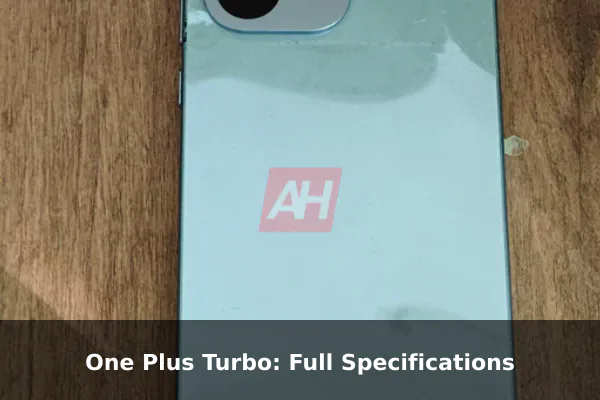
Performance is clearly the headline. The reported Qualcomm SM8850-AC Snapdragon 8 Elite Gen 5, built on a 3 nm process, uses an octa-core Oryon V3 layout with two Phoenix L cores at up to 4.6 GHz and six Phoenix M cores at 3.62 GHz, backed by the Adreno 840 GPU. Paired with fast UFS storage up to 512GB, this configuration should chew through demanding games and heavy multitasking with ease. There is no microSD card slot, so buyers will want to choose their storage tier carefully at purchase.
Camera System
The One Plus Turbo reportedly runs a dual rear setup led by a 50 MP f/1.8 wide sensor with PDAF and optical image stabilization, joined by an 8 MP f/2.2 ultrawide with a 112-degree field of view. A dedicated color spectrum sensor, LED flash, HDR, and panorama round out the package. Video capture reaches up to 4K at 120fps with gyro-EIS and OIS, which is strong for a device in this tier. On the front, a 16 MP f/2.4 selfie camera handles 1080p video and HDR stills. This is a capable rather than headline-grabbing camera array, prioritizing stabilized everyday shooting over exotic telephoto reach.
Battery Life and Charging
Endurance is the other marquee feature. The rumored 8000 mAh Si/C Li-Ion battery is significantly larger than the typical 5000 mAh flagship cell, and silicon-carbon chemistry helps pack that capacity into a manageable body. It is paired with 100W wired charging that includes Bypass charging, a useful feature for gamers who want to power the phone directly while playing to reduce heat and battery wear. If real-world results match the spec sheet, multi-day usage for lighter users looks realistic.
Software and Connectivity
The One Plus Turbo is expected to ship with Android 16 layered under ColorOS 16, reflecting the software direction of recent One Plus and Oppo devices. Connectivity is comprehensive: 5G with SA/NSA support, Wi-Fi 6, Bluetooth 5.4 with aptX HD, NFC, an infrared port, and broad multi-band GNSS positioning including dual-frequency GPS. Notable trade-offs include a USB Type-C 2.0 port rather than a faster standard, and no 3.5mm headphone jack, though stereo speakers and an ultrasonic under-display fingerprint sensor add to the premium feel.
Who Should Buy the One Plus Turbo?
This phone is best suited to power users, mobile gamers, and heavy-usage buyers who want flagship silicon and exceptional battery life without an ultra-flagship focus on camera versatility. Photography enthusiasts who need long telephoto zoom may prefer a different device, and anyone needing verified pricing or a firm release date should hold off until One Plus makes an official announcement. Cross-checking the final specs on the OnePlus website and independent databases like GSMArena is wise once the phone launches.
Conclusion
If the leaked specifications prove accurate, the One Plus Turbo lands as a performance-and-endurance specialist: Snapdragon 8 Elite Gen 5 power, a sharp 120Hz AMOLED screen, IP68 durability, and a standout 8000 mAh battery with 100W charging. Its camera setup is solid rather than class-leading, which keeps the focus squarely on speed and stamina. For gamers and heavy users who value all-day-plus battery life and flagship processing, it is well worth watching. Just remember the device is still rumored, so treat pricing, availability, and final specs as provisional and confirm the details through official One Plus channels before buying.
References
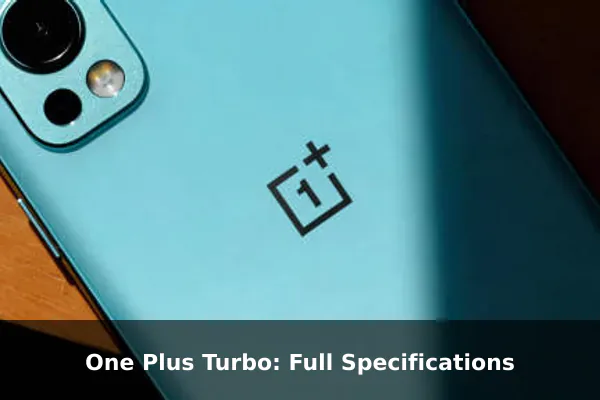
- OnePlus Official Website – Primary manufacturer source for official OnePlus device specifications, features, and product listings.
- OnePlus Global Product/Specs Page (oneplus.com) – Official spec sheet for the specific OnePlus model, the authoritative reference for display, chipset, battery, camera, and charging details.
- GSMArena – Well-established, independent phone specifications database widely used to verify and cross-check technical smartphone data.
- Qualcomm Snapdragon (Chipset Reference) – Official source for the SoC/processor specifications typically used in OnePlus Turbo-class devices.
- MediaTek Dimensity (Chipset Reference) – Official chipset documentation in case the device uses a MediaTek Dimensity SoC, for verifying processor specs.
