
The Huawei Mate 50 Pro arrived in September 2022 as the flagship that had to prove Huawei could still build a world-class phone without Google services and without 5G. It answers with a variable-aperture main camera, a 120Hz OLED panel wrapped in Huawei’s own Kunlun Glass, and a Snapdragon 8+ Gen 1 tuned for 4G. It is a device defined as much by what it works around as by what it delivers.
Priced at roughly 900 EUR at launch, the Mate 50 Pro sits firmly in premium territory, competing on hardware quality, imaging, and durability rather than raw connectivity. This article breaks down what that trade-off actually means in daily use, where the phone excels, and which buyer it makes the most sense for.
Full Specifications
Network
| Technology: | GSM / CDMA / HSPA / CDMA2000 / LTE |
| 2G bands: | GSM 850 / 900 / 1800 / 1900 |
| CDMA 800 | |
| 3G bands: | HSDPA 800 / 850 / 900 / 1700(AWS) / 1900 / 2100 |
| CDMA2000 1x | |
| 4G bands: | 1, 2, 3, 4, 5, 7, 8, 12, 13, 17, 18, 19, 20, 26, 28, 32, 34, 38, 39, 40, 41, 66 – International |
| 1, 2, 3, 4, 5, 7, 8, 12, 17, 18, 19, 20, 26, 28, 34, 38, 39, 40, 41 – China | |
| Speed: | HSPA, LTE |
Launch
| Announced: | 2022, September 06 |
| Status: | Available. Released 2022, September 28 |
Body
| Dimensions: | 162.1 x 75.5 x 8.5 mm (6.38 x 2.97 x 0.33 in) |
| Weight: | 205 g / 209 g (7.23 oz) |
| SIM: | Nano-SIMNano-SIM + Nano-SIM |
| IP68 dust tight and water resistant (immersible up to 6m for 30 min) |
Display
| Type: | OLED, 1B colors, 120Hz |
| Size: | 6.74 inches, 111.8 cm2 (~91.3% screen-to-body ratio) |
| Resolution: | 1212 x 2616 pixels, 19.5:9 ratio (~428 ppi density) |
| Protection: | Huawei Kunlun Glass |
Platform
| OS: | EMUI 13 (International), HarmonyOS 3.0 (China) |
| Chipset: | Qualcomm SM8475 Snapdragon 8+ Gen 1 4G (4 nm) |
| CPU: | Octa-core (1×3.19 GHz Cortex-X2 & 3×2.75 GHz Cortex-A710 & 4×2.0 GHz Cortex-A510) |
| GPU: | Adreno 730 |
Memory
| Card slot: | Nano Memory (uses shared SIM slot) |
| Internal: | 256GB 8GB RAM, 512GB 8GB RAM |
| UFS 3.1 |
Main Camera
| Triple: | 50 MP, f/1.4-f/4.0, 24mm (wide), PDAF, OIS 64 MP, f/3.5, 90mm (periscope telephoto), PDAF, OIS, 3.5x optical zoom 13 MP, f/2.2, 13mm, 120˚ (ultrawide), PDAF |
| Features: | Laser AF, color spectrum sensor, LED flash, panorama, HDR |
| Video: | 4K@30/60fps, 1080p@30/60/120/240/480fps, 720p@960fps, 720p@3840fps, HDR, gyro-EIS |
Selfie camera
| Single: | 13 MP, f/2.4, 18mm (ultrawide) TOF 3D, (depth/biometrics sensor) |
| Features: | HDR, panorama |
| Video: | 4K@30/60fps, 1080p@30/60/240fps |
Sound
| Loudspeaker: | Yes, with stereo speakers |
| 3.5mm jack: | No |
| 32-bit/384kHz audio |
Comms
| WLAN: | Wi-Fi 802.11 a/b/g/n/ac/6, dual-band, Wi-Fi Direct |
| Bluetooth: | 5.2, A2DP, LE |
| Positioning: | GPS (L1+L5), GLONASS (L1), BDS (B1I+B1c+B2a), GALILEO (E1+E5a), QZSS (L1+L5), NavIC (L5) |
| NFC: | Yes |
| Infrared port: | Yes |
| Radio: | No |
| USB: | USB Type-C 3.1, OTG, Display Port 1.2 |
Features
| Sensors: | Face ID, fingerprint (under display, optical), accelerometer, gyro, proximity, barometer, compass |
| BDS Satellite Messaging (sending only) – China only |
Battery
| Type: | Li-Po 4700 mAh |
| Charging: | 66W wired 50W wireless 5W reverse wireless |
Misc
| Colors: | Black, Silver, Purple, Orange |
| Models: | DCO-AL00, DCO-LX9 |
| Price: | About 900 EUR |
Our Tests
| Performance: | AnTuTu: 979921 (v9) GeekBench: 3839 (v5.1) GFXBench: 68fps (ES 3.1 onscreen) |
| Display: | 946 nits max brightness (measured) |
| Camera: | Photo / Video |
| Loudspeaker: | -24.8 LUFS (Very good) |
| Battery: | Active use score 10:36h |
| Battery (old): | Endurance rating 104h |
Price and Availability
The Huawei Mate 50 Pro offers a compelling combination of features and performance. While the base price is around €900, the actual cost may vary depending on your location and retailer. Below, you’ll find the approximate price of the Huawei Mate 50 Pro converted into various currencies. Please note that these are estimates based on recent exchange rates as of July 12, 2026 and may not reflect the exact price you’ll find at a retailer.
- United States: $1,028
- Japan: ¥166,343
- United Kingdom: £767
- Australia: A$1,480
- Canada: C$1,455
- Taiwan: NT$33,026
- Denmark: kr6.716
- Saudi Arabia: ﷼3,855
- South Korea: ₩1,547,682
- Germany: €900
- Brazil: R$5.260
- Vietnam: ₫26.966.786
- Kenya: KSh 132,916
- India: ₹98,066
- Indonesia: Rp 18.571.558
- Nigeria: ₦1,399,674
- Pakistan: ₨285,920
- Philippines: ₱63,332
- Bangladesh: ৳১,২৬,৬৮৩
Value: A Premium Price With Unusual Trade-Offs
At around 900 EUR, the Mate 50 Pro asks flagship money while omitting the one feature most rivals include at this tier: 5G. For buyers in regions with mature 4G LTE coverage, that omission may be tolerable, but it is the single biggest factor shaping the phone’s value. What you gain in return is a genuinely differentiated camera system, IP68 durability, and build quality that few competitors match. The value proposition, then, is narrow but real: this is a phone for people who prioritize imaging, design, and longevity over connectivity and app-store convenience.
Design and Build: Flagship Materials, Serious Durability
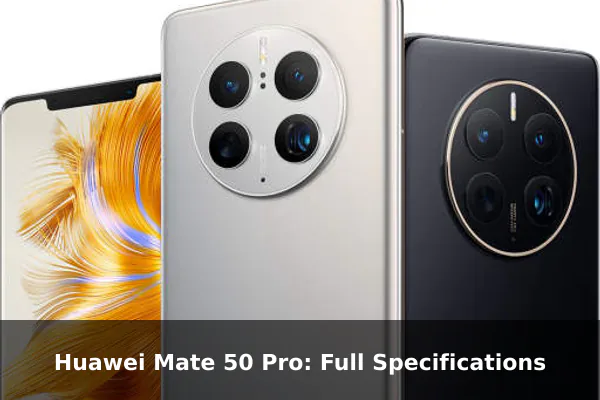
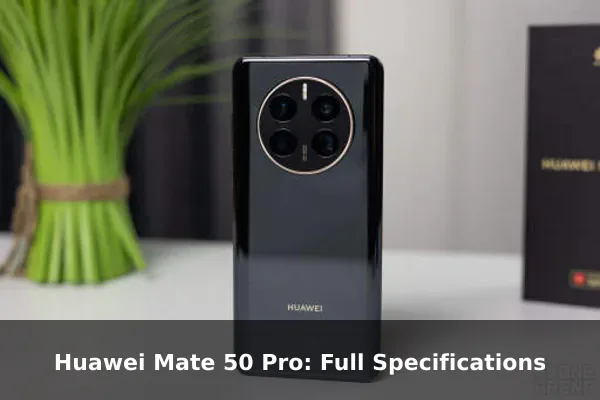
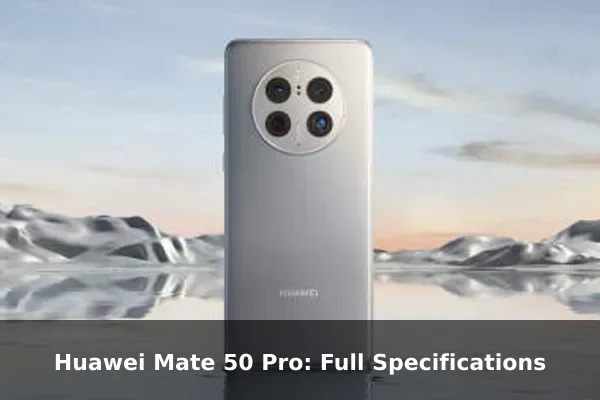
Measuring 162.1 x 75.5 x 8.5 mm and weighing 205-209 g, the Mate 50 Pro feels substantial without being unwieldy. The standout is Huawei Kunlun Glass on the front, marketed for improved drop resistance, paired with an IP68 rating that allows immersion up to 6 meters for 30 minutes. Color options span Black, Silver, Purple, and Orange, the last of which leans into the phone’s design-forward identity. This is a device engineered to survive daily abuse, and the materials reflect the premium asking price.
Display: Bright, Fluid, and Well-Protected
The 6.74-inch OLED panel offers a 1212 x 2616 resolution at roughly 428 ppi, a smooth 120Hz refresh rate, and 1 billion colors. Independent testing measured peak brightness near 946 nits, which is competitive for outdoor visibility even if it trails the brightest 2022 flagships. With a 91.3% screen-to-body ratio and Kunlun Glass protection, the screen is one of the phone’s strongest everyday assets, balancing fluid scrolling with resilient day-to-day usability.
Performance: Snapdragon 8+ Gen 1, Minus 5G
Under the hood sits the Qualcomm Snapdragon 8+ Gen 1, built on a 4 nm process with a 3.19 GHz Cortex-X2 prime core and Adreno 730 graphics, paired with 8GB of RAM and up to 512GB of UFS 3.1 storage. Benchmark results reported figures such as an AnTuTu score near 979,000 and a GeekBench single-run around 3,839, placing it among the fastest 2022 chips. The catch is Huawei’s 4G-only variant of the silicon, which caps mobile data at LTE speeds regardless of the processor’s raw horsepower.
Camera: The Variable Aperture Headline
Imaging is the Mate 50 Pro’s centerpiece. The 50 MP main sensor features a physically variable aperture ranging from f/1.4 to f/4.0, letting the camera adjust depth of field and light intake in a way most phones cannot. It is joined by a 64 MP periscope telephoto with 3.5x optical zoom and OIS, plus a 13 MP ultrawide. Laser autofocus, a color spectrum sensor, and video up to 4K at 60fps round out a versatile system. For photography enthusiasts, this hardware is a compelling reason to consider the phone on its own merits.
Battery and Charging: All-Day Endurance, Fast Top-Ups
A 4,700 mAh battery drives the Mate 50 Pro, supported by 66W wired charging, 50W wireless charging, and 5W reverse wireless output. Independent endurance testing produced an active-use score above 10 hours, indicating comfortable all-day stamina for most users. The fast wired and wireless charging speeds mean short top-ups restore meaningful battery life, reducing the friction of the phone’s power management for busy days.
Software and Connectivity: The Ecosystem Question
Software is where the Mate 50 Pro demands the most consideration. It ships with EMUI 13 internationally and HarmonyOS 3.0 in China, both operating without Google Mobile Services. Buyers must rely on Huawei’s AppGallery and alternative app-sourcing methods, which suits some users and frustrates others. Connectivity is otherwise well-equipped: Wi-Fi 6, Bluetooth 5.2, NFC, an infrared port, USB-C 3.1 with DisplayPort output, and broad satellite positioning support. There is even BDS satellite messaging for sending texts off-grid in China, underscoring the phone’s engineering ambition.
Who Should Buy the Huawei Mate 50 Pro
This phone is best suited to photography-focused buyers who value the variable-aperture camera and can live comfortably within Huawei’s app ecosystem and 4G connectivity. It is a poor fit for anyone who depends on Google apps, needs 5G, or expects the widest possible third-party software support. If your priorities are imaging quality, durable premium hardware, and a bright high-refresh display, the Mate 50 Pro delivers; if seamless mainstream software and future-proof networking top your list, look elsewhere.
Conclusion
The Huawei Mate 50 Pro is a distinctive flagship that trades 5G and Google services for a standout variable-aperture camera, rugged Kunlun Glass build, and a bright 120Hz OLED display. It is not a universal recommendation, but for imaging enthusiasts comfortable with Huawei’s ecosystem and 4G connectivity, it remains a uniquely capable and durable choice worth its premium positioning. Verify current pricing and regional availability before buying, as both can change over time.
References
- HUAWEI Mate 50 Pro – HUAWEI UK – Official Huawei product page with primary details on design, display refresh rate, camera features, battery capacity, charging, IP68 rating, and product notes.
- HUAWEI Mate 50 Pro Support – HUAWEI Global – Official support page confirming the Mate 50 Pro model and DCO-LX9 storage/SIM variants.
- Snapdragon 8+ Gen 1 Mobile Platform – Qualcomm – Official chipset source for verifying Snapdragon 8+ Gen 1 platform details used by the device.
- Huawei Mate 50 Pro – GSMArena – Established phone-spec reference useful for cross-checking the full spec table, launch information, dimensions, network bands, cameras, and memory variants.
- Huawei Mate 50 Pro Smartphone Review – Notebookcheck – Detailed independent technical review with measurements and context for display, performance, battery, camera behavior, and lack of 5G.
