
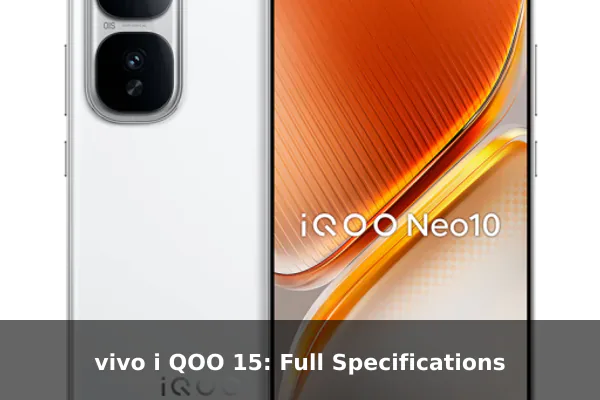
The vivo i QOO 15 is a performance-first Android flagship built around a large LTPO AMOLED display, Qualcomm’s Snapdragon 8 Elite Gen 5 platform, and a 7000mAh silicon-carbon battery. It is positioned for buyers who want high-end speed and endurance without treating camera hardware or charging as secondary features.
This specs-focused overview highlights the practical meaning of the phone’s main hardware choices, including its display, benchmark results, triple 50MP rear camera system, Android 16 software base, and regional connectivity differences. The full specifications table will cover every band, sensor, storage option, and measurement separately.
Full Specifications
Network
| Technology: | GSM / HSPA / LTE / 5G |
| 2G bands: | GSM 850 / 900 / 1800 / 1900 |
| 3G bands: | HSDPA 800 / 850 / 900 / 1700(AWS) / 1900 / 2100 |
| 4G bands: | 1, 2, 3, 4, 5, 7, 8, 18, 19, 20, 26, 28, 34, 38, 39, 40, 41, 42, 43, 48, 66, 71 – International |
| 1, 2, 3, 4, 5, 7, 8, 18, 19, 20, 25, 26, 28, 34, 38, 39, 40, 41, 42, 43, 48, 66 – China | |
| 5G bands: | 1, 2, 3, 5, 7, 8, 18, 20, 26, 28, 38, 40, 41, 48, 66, 71, 77, 78 SA/NSA – International |
| 1, 2, 3, 5, 7, 8, 18, 20, 25, 26, 28, 38, 40, 41, 48, 66, 75, 77, 78, 80, 81, 83, 84, 89, 91, 92, 93, 94 SA/NSA – China | |
| Speed: | HSPA, LTE, 5G |
Launch
| Announced: | 2025, October 20 |
| Status: | Available. Released 2025, October 20 |
Body
| Dimensions: | 163.7 x 76.8 x 8.1 mm (6.44 x 3.02 x 0.32 in) |
| Weight: | 215 g or 220 g (7.58 oz) |
| Build: | Glass front, aluminum frame, fiber-reinforced plastic back or glass back |
| SIM: | · Nano-SIM + Nano-SIM + eSIM (max 2 at a time) – International· Nano-SIM + Nano-SIM – China |
| IP68/IP69 dust tight and water resistant (high pressure water jets; immersible up to 1.5m for 30 min) Color-changing rear panel (gray color only) |
Display
| Type: | LTPO AMOLED, 1B colors, 144Hz, PWM, Dolby Vision, HDR10+, HDR Vivid, 1000 nits (typ), 2600 nits (HBM), 6000 nits (peak) |
| Size: | 6.85 inches, 114.0 cm2 (~90.7% screen-to-body ratio) |
| Resolution: | 1440 x 3168 pixels (~508 ppi density) |
Platform
| OS: | Android 16, up to 5 major Android upgrades, OriginOS 6 |
| Chipset: | Qualcomm SM8850-AC Snapdragon 8 Elite Gen 5 (3 nm) |
| CPU: | Octa-core (2×4.6 GHz Oryon V3 Phoenix L + 6×3.62 GHz Oryon V3 Phoenix M) |
| GPU: | Adreno 840 |
Memory
| Card slot: | No |
| Internal: | 256GB 12GB RAM, 256GB 16GB RAM, 512GB 12GB RAM, 512GB 16GB RAM, 1TB 16GB RAM |
| UFS 4.1 |
Main Camera
| Triple: | 50 MP, f/1.9, 24mm (wide), 1/1.56″, 1.0µm, PDAF, OIS 50 MP, f/2.6, 85mm (periscope telephoto), 1/1.95″, 0.8µm, PDAF, OIS, 3x optical zoom 50 MP, f/2.1, 15mm (ultrawide), 1/2.76″, 0.64µm, AF |
| Features: | LED flash, HDR, panorama |
| Video: | 8K@30fps, 4K@24/30/60fps, 1080p@30/60/120/240fps, gyro-EIS |
Selfie camera
| Single: | 32 MP, f/2.2, 21mm (wide), 1/3.1″, 0.7µm |
| Features: | HDR |
| Video: | 4K@30/60fps, 1080p@30/60fps |
Sound
| Loudspeaker: | Yes, with stereo speakers |
| 3.5mm jack: | No |
| 24-bit/192kHz Hi-Res audio Snapdragon Sound |
Comms
| WLAN: | Wi-Fi 802.11 a/b/g/n/ac/6/7, dual-band, Wi-Fi Direct |
| Bluetooth: | 6.0, A2DP, LE, aptX HD, aptX Adaptive, aptX Lossless, LHDC 5 |
| Positioning: | GPS (L1+L5), GLONASS (G1), BDS (B1I+B1c+B2a), GALILEO (E1+E5a), QZSS (L1+L5) |
| NFC: | Yes |
| Infrared port: | Yes |
| Radio: | No |
| USB: | USB Type-C 3.2, OTG |
Features
| Sensors: | Fingerprint (under display, ultrasonic), accelerometer, gyro, proximity, compass |
Battery
| Type: | Si/C Li-Ion 7000 mAh |
| Charging: | 100W wired, PPS, PD 40W wireless Bypass charging |
Misc
| Colors: | Alpha, Legend, Gray, Green, Blue |
| Models: | I2501, V2505A |
| Price: | ₹ 72,999 |
Our Tests
| Performance: | AnTuTu: 2973303 (v10), 3785250 (v11) GeekBench: 10466 (v6) 3DMark: 7229 (Wild Life Extreme) |
| Display: | 1313 nits max brightness (measured) |
| Loudspeaker: | -25.0 LUFS (Very good) |
| Battery: | Active use score 21:47h |
Price and Availability
The vivo i QOO 15 offers a compelling combination of features and performance. While the base price is around ₹72,999, the actual cost may vary depending on your location and retailer. Below, you’ll find the approximate price of the vivo i QOO 15 converted into various currencies. Please note that these are estimates based on recent exchange rates as of August 17, 2026 and may not reflect the exact price you’ll find at a retailer.
- United States: $763
- Japan: ¥121,753
- United Kingdom: £565
- Australia: A$1,078
- Canada: C$1,062
- Taiwan: NT$24,402
- Denmark: kr4.945
- Saudi Arabia: ﷼2,861
- South Korea: ₩1,080,375
- Germany: €661
- Brazil: R$3.964
- Vietnam: ₫19.866.383
- Kenya: KSh 98,864
- India: ₹72,999
- Indonesia: Rp 13.613.380
- Nigeria: ₦1,040,160
- Pakistan: ₨212,355
- Philippines: ₱46,966
- Bangladesh: ৳৯৩,৮৫৮
Why Should You Buy the vivo i QOO 15?
The strongest argument for the vivo i QOO 15 is balance at the upper end of the Android market. It combines a current-generation flagship chipset, a very large battery, fast wired charging, wireless charging, a sharp 144Hz display, and a complete triple-camera layout. That mix makes it more than a gaming phone with a big battery, even though performance is clearly central to its identity.
At the supplied India price point, it sits in premium territory, so the value question depends on whether you will use its headlining hardware. Buyers who mainly browse, stream, and take casual photos can find cheaper phones that feel fast enough. Buyers who play demanding games, record a lot of video, multitask heavily, or keep phones for several years will get more from the Snapdragon 8 Elite Gen 5 platform, UFS 4.1 storage, and the promised multi-year Android upgrade path.
Design and Durability
The vivo i QOO 15 is a large phone, measuring roughly 163.7 x 76.8 x 8.1 mm, and weight varies by finish at about 215 g or 220 g. That puts it firmly in the big-screen flagship class. It is not aimed at users who want a compact one-handed device, but the thickness remains controlled considering the 7000mAh battery inside.
The build uses a glass front with an aluminum frame and either a fiber-reinforced plastic back or a glass back depending on variant. The IP68/IP69 rating is an important durability point because it covers dust-tight construction, immersion resistance, and high-pressure water jets. The gray version also has a color-changing rear panel, which gives that finish a more distinctive visual identity than the standard color options.
Display Experience
The 6.85-inch LTPO AMOLED panel is one of the phone’s core attractions. Its 1440 x 3168 resolution produces a very sharp 508 ppi density, while the 144Hz refresh rate gives the interface and supported games more headroom than standard 120Hz screens. LTPO technology also matters because it allows more flexible refresh-rate behavior, which can help balance smoothness and power use.
Brightness claims are aggressive, with 1000 nits typical brightness, 2600 nits high-brightness mode, and 6000 nits local peak brightness. In the supplied test data, measured maximum brightness reached 1313 nits, which is still strong for outdoor readability. Dolby Vision, HDR10+, and HDR Vivid support make the display especially suitable for HDR streaming and high-quality video playback, provided the app and content support those formats.
Performance and Gaming
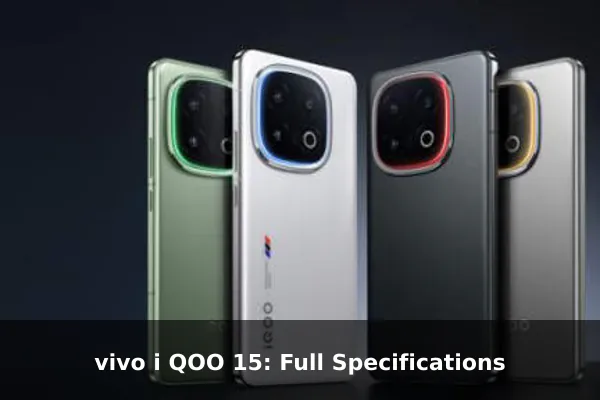
The Snapdragon 8 Elite Gen 5 is the hardware centerpiece. The listed configuration uses an octa-core Oryon CPU with two high-performance cores clocked at 4.6GHz and six performance cores at 3.62GHz, paired with the Adreno 840 GPU. Qualcomm’s official platform information also points to major gains in CPU, GPU, AI, and connectivity capability compared with prior generations, though real-world results still depend on thermal tuning and software.
The supplied benchmark data is very high: AnTuTu scores of 2,973,303 in v10 and 3,785,250 in v11, GeekBench 6 at 10,466, and 3DMark Wild Life Extreme at 7,229. Those figures support the phone’s gaming and heavy-use pitch. UFS 4.1 storage and up to 16GB RAM should also help with fast app loading, large games, and long-term responsiveness.
Camera System
The rear camera setup is more complete than the usual performance-phone formula. It uses three 50MP cameras: a 24mm wide camera with OIS, an 85mm periscope telephoto camera with OIS and 3x optical zoom, and a 15mm ultrawide camera with autofocus. The telephoto camera is especially useful because it gives portraits, stage shots, travel details, and compressed perspectives better reach than a simple digital crop.
Video support is also broad, reaching 8K at 30fps, 4K at up to 60fps, and 1080p slow-motion options up to 240fps, with gyro-EIS listed for stabilization. The 32MP selfie camera is not just a basic front sensor either, as it supports 4K recording at 30fps and 60fps. That makes the phone better suited for creators who switch between rear and front cameras often.
Battery and Charging
The 7000mAh silicon-carbon battery is one of the vivo i QOO 15’s biggest differentiators. Many flagship phones still sit far below this capacity, so the i QOO 15 should appeal to heavy users who do not want to ration screen time, hotspot use, gaming, navigation, or camera work throughout the day.
The supplied active use score of 21:47h is excellent and reinforces the capacity advantage. Charging is also strong, with 100W wired charging, PPS and PD support, 40W wireless charging, and bypass charging. Bypass charging is particularly relevant for gaming because it can power the phone while reducing battery stress during long plugged-in sessions.
Software and Updates
The phone ships with Android 16 and OriginOS 6, with up to five major Android upgrades listed. That update promise is a major point for buyers comparing flagship phones over a three-to-five-year ownership period. Strong hardware is only half of longevity; software support determines how long security patches, platform features, and app compatibility remain practical.
OriginOS 6 will be the main software experience, so buyers moving from Samsung, Pixel, OnePlus, or Xiaomi phones should expect differences in visual style, system apps, multitasking tools, and background app management. The hardware is clearly capable of long service, but users should still check regional software policies and local feature availability before purchase.
Connectivity and Everyday Hardware
Connectivity is extensive. The phone supports GSM, HSPA, LTE, and 5G, with separate International and China band lists. International variants include broad LTE and sub-6 5G support, while China variants list additional domestic 5G bands. This matters for import buyers, because the model number and regional SKU can affect network compatibility, eSIM support, and available software features.
Wireless features include Wi-Fi 7, Bluetooth 6.0, NFC, infrared, and multi-constellation positioning with dual-frequency support on several satellite systems. USB Type-C 3.2 with OTG is another useful high-end detail for faster wired transfers and external accessories. The ultrasonic under-display fingerprint sensor, stereo speakers, Hi-Res audio, Snapdragon Sound, and lack of a 3.5mm headphone jack round out the everyday hardware picture.
Who Should Buy It?
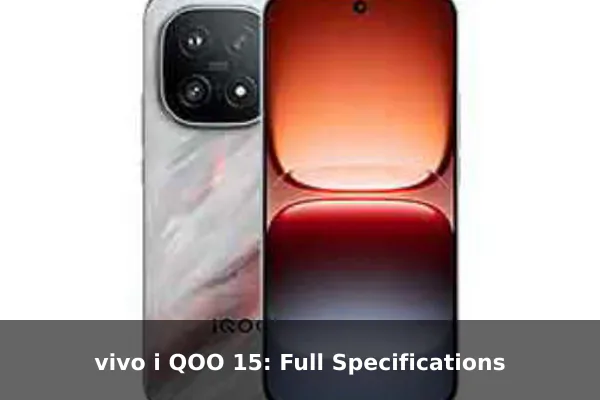
The vivo i QOO 15 is best for users who want a high-performance Android phone with battery life as a headline feature rather than a compromise. It fits mobile gamers, frequent travelers, power users, and buyers who want a sharp high-refresh display with strong storage and charging specifications.
It is less ideal for people who prefer compact phones, need a headphone jack, rely on microSD expansion, or want the lightest possible flagship. Import shoppers should be especially careful to choose the correct regional model, because SIM setup, eSIM availability, network bands, colors, weight, and storage options can differ between International, India, and China listings.
Conclusion
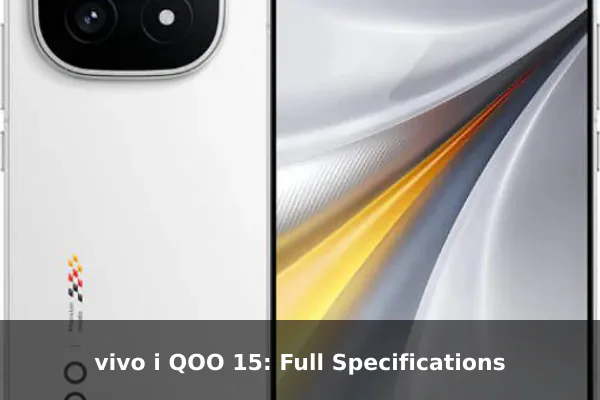
The vivo i QOO 15 stands out as a serious flagship for performance, display quality, battery endurance, and charging flexibility. Its triple 50MP camera system and long Android upgrade promise make it more rounded than a pure gaming handset. Buy it if you want a large, fast, long-lasting Android flagship and are comfortable with its size, price tier, and regional variant checks.
References
- iQOO Global – iQOO 15 Specifications – Official global specifications page for iQOO 15, covering platform, storage, battery, display, network bands, cameras, connectivity, sensors, dimensions, and in-box items.
- vivo China – iQOO 15 Specifications – Official China-market product specification page, useful for verifying model V2505A, Chinese variants, pricing, release timing, dimensions, network bands, and regulatory license details.
- iQOO India – iQOO 15 Specifications – Official India-market specifications page, useful for checking regional variant names, RAM/storage options, dimensions, weight, charging, software, and included features.
- Qualcomm – Snapdragon 8 Elite Gen 5 Mobile Platform – Official chipset reference for verifying Snapdragon 8 Elite Gen 5 platform details used by the iQOO 15.
- MIIT Network Access License Verification Platform – Official Chinese telecom equipment access-license portal referenced by vivo for verifying device network-access license information such as model V2505A and license number.
