
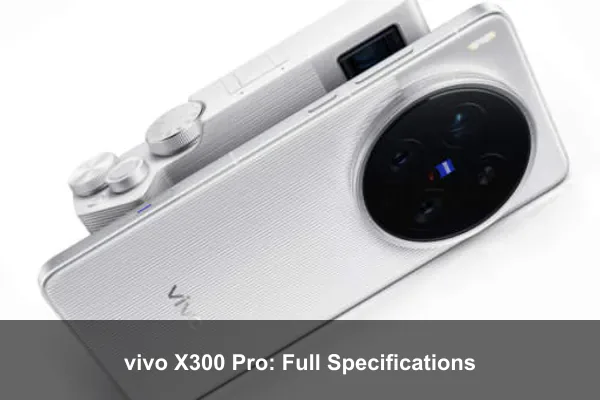
The vivo X300 Pro arrives as the brand’s most ambitious imaging flagship to date, pairing a Zeiss-tuned triple camera with the brand-new MediaTek Dimensity 9500 and a software promise of five Android upgrades. Announced on 13 October 2025 and on shelves by 17 October, it slots into the upper tier of vivo’s lineup with pricing of € 1,399 / $ 819 / ₹ 109,999 depending on region and storage.
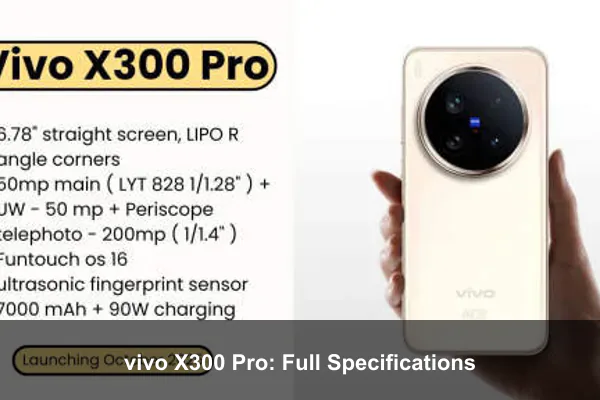
This page breaks down what the X300 Pro actually delivers in daily use, from its 200 MP periscope telephoto and 6,510 mAh Si/C battery to its 4,500-nit LTPO AMOLED panel and IP68/IP69 durability. The full spec sheet sits in a dedicated table below, while the sections here focus on context, trade-offs, and who the phone is built for.
Full Specifications
Network
| Technology: | GSM / HSPA / LTE / 5G |
| 2G bands: | GSM 850 / 900 / 1800 / 1900 |
| 3G bands: | HSDPA 800 / 850 / 900 / 1700(AWS) / 1900 / 2100 – China |
| HSDPA 850 / 900 / 1700(AWS) / 1900 / 2100 – International | |
| 4G bands: | 1, 2, 3, 4, 5, 7, 8, 18, 19, 20, 25, 26, 28, 34, 38, 39, 40, 41, 42, 43, 48, 66 |
| 5G bands: | 1, 2, 3, 5, 7, 8, 18, 20, 25, 26, 28, 34, 38, 39, 40, 41, 48, 66, 77, 78, 79 SA/NSA/Sub6 |
| Speed: | HSPA, LTE, 5G |
Launch
| Announced: | 2025, October 13 |
| Status: | Available. Released 2025, October 17 |
Body
| Dimensions: | 161.2 x 75.5 x 8 mm (6.35 x 2.97 x 0.31 in) |
| Weight: | 226 g (7.97 oz) |
| Build: | Glass front (Armor Glass), aluminum alloy frame, glass back |
| SIM: | · Nano-SIM + Nano-SIM + eSIM (max 2 at a time) – International· Nano-SIM + Nano-SIM – China |
| IP68/IP69 dust tight and water resistant (high pressure water jets; immersible up to 1.5m for 30 min) |
Display
| Type: | LTPO AMOLED, 1B colors, 120Hz, 2160Hz PWM, HDR10+, HDR Vivid, Dolby Vision, 4500 nits (peak) |
| Size: | 6.78 inches, 111.5 cm2 (~91.6% screen-to-body ratio) |
| Resolution: | 1260 x 2800 pixels, 20:9 ratio (~452 ppi density) |
| Protection: | Armor Glass, Mohs level 4 |
| Ultra HDR image support |
Platform
| OS: | Android 16, up to 5 major Android upgrades, OriginOS 6 |
| Chipset: | Mediatek Dimensity 9500 (3 nm) |
| CPU: | Octa-core (1×4.21 GHz C1-Ultra & 3×3.5 GHz C1-Premium & 4×2.7 GHz C1-Pro) |
| GPU: | Arm G1-Ultra |
Memory
| Card slot: | No |
| Internal: | 256GB 12GB RAM, 512GB 16GB RAM, 1TB 16GB RAM |
| Dual UFS 4.1 |
Main Camera
| Triple: | 50 MP, f/1.6, 24mm (wide), 1/1.28″, 1.22µm, PDAF, OIS 200 MP, f/2.7, 85mm (periscope telephoto), 1/1.4″, 0.56µm, multi-directional PDAF, OIS, 3.7x optical zoom, macro 2.7:1 50 MP, f/2.0, 15mm, 119˚ (ultrawide), 1/2.76″, 0.64µm, AF |
| Features: | Laser AF, color spectrum sensor, Zeiss optics, Zeiss T* lens coating, LED flash, panorama, HDR, 3D LUT import |
| Video: | 8K@30fps, 4K@30/60/120fps, 1080p@30/60/120/240fps, gyro-EIS, 4K@120fps 10-bit Log, Dolby Vision HDR |
Selfie camera
| Single: | 50 MP, f/2.0, 20mm (wide), 1/2.76″, 0.64µm, AF |
| Features: | HDR |
| Video: | 4K@30/60fps, 1080p@30/60fps |
Sound
| Loudspeaker: | Yes, with stereo speakers |
| 3.5mm jack: | No |
| 24-bit/192kHz Hi-Res audio |
Comms
| WLAN: | Wi-Fi 802.11 a/b/g/n/ac/6/7, dual-band |
| Bluetooth: | 5.4, A2DP, LE, aptX HD, LHDC 5 |
| Positioning: | GPS (L1+L5), GLONASS (L1), BDS (B1I+B1c+B2a+B2b), GALILEO (E1+E5a+E5b), QZSS (L1+L5), NavIC (L5) |
| NFC: | Yes |
| Infrared port: | Yes |
| Radio: | No |
| USB: | USB Type-C 3.2, OTG |
Features
| Sensors: | Fingerprint (under display, ultrasonic), accelerometer, gyro, proximity, compass |
| Satellite connectivity support (optional, market/region dependent) |
Battery
| Type: | · Si/C Li-Ion 6510 mAh (Global)· Si/C Li-Ion 5440 mAh (EU markets) |
| Charging: | 90W wired 40W wireless Reverse wireless Reverse wired |
Misc
| Colors: | Phantom Black, Mist Blue, Dune Brown, Cloud White |
| Models: | V2514, V2502A |
| Price: | € 1,399.00 / $ 819.00 / ₹ 109,999 |
Our Tests
| Performance: | AnTuTu: 2982875 (v10), 3533222 (v11) GeekBench: 10264 (v6) 3DMark: 7263 (Wild Life Extreme) |
| Display: | 2113 nits max brightness (measured) |
| Loudspeaker: | -24.8 LUFS (Very good) |
| Battery: | Active use score 12:45h |
EU LABEL
| Energy: | Class B |
| Battery: | 48:21h endurance, 1200 cycles |
| Free fall: | Class B (180 falls) |
| Repairability: | Class C |
Price and Availability
The vivo X300 Pro offers a compelling combination of features and performance. While the base price is around €1.399, the actual cost may vary depending on your location and retailer. Below, you’ll find the approximate price of the vivo X300 Pro converted into various currencies. Please note that these are estimates based on recent exchange rates as of June 16, 2026 and may not reflect the exact price you’ll find at a retailer.
- United States: $1,622
- Japan: ¥259,897
- United Kingdom: £1,209
- Australia: A$2,295
- Canada: C$2,269
- Taiwan: NT$51,177
- Denmark: kr10.441
- Saudi Arabia: ﷼6,084
- South Korea: ₩2,457,227
- Germany: €1.399
- Brazil: R$8.201
- Vietnam: ₫42.356.519
- Kenya: KSh 210,274
- India: ₹1,53,735
- Indonesia: Rp 28.732.172
- Nigeria: ₦2,194,432
- Pakistan: ₨451,664
- Philippines: ₱98,013
- Bangladesh: ৳১,৯৯,২৫৫
Why Should You Buy the vivo X300 Pro?
The X300 Pro is a no-compromise flagship aimed at buyers who want a true camera phone without sacrificing performance or endurance. Its headline draw is the 200 MP periscope telephoto with 3.7x optical zoom and Zeiss optics, but the package is rounded out by a flagship Dimensity 9500 chip, dual UFS 4.1 storage up to 1 TB, and a large silicon-carbon battery. If you value photographic reach and want a device that stays relevant through five years of Android updates, it makes a strong case.
Design and Build Quality
Measuring 161.2 x 75.5 x 8 mm and weighing 226 g, the X300 Pro is a substantial phone, with the heft coming largely from its big battery and periscope module. vivo wraps it in an aluminum alloy frame with Armor Glass front and a glass back, available in Phantom Black, Mist Blue, Dune Brown, and Cloud White. Crucially, it carries both IP68 and IP69 ratings, meaning it survives not only immersion up to 1.5 m for 30 minutes but also high-pressure water jets, a level of protection still rare even among premium rivals.
Display Experience
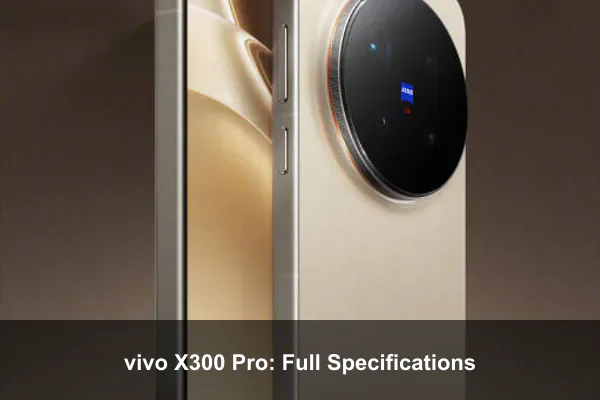
The 6.78-inch LTPO AMOLED panel is a clear flagship-grade screen. It runs at a 1260 x 2800 resolution (about 452 ppi), refreshes at up to 120 Hz, and supports HDR10+, HDR Vivid, and Dolby Vision. vivo quotes a 4,500-nit peak, and independent measurement landed at 2,113 nits of full-screen brightness, which is more than enough for harsh sunlight. High-frequency 2160 Hz PWM dimming helps reduce eye fatigue at low brightness, and Armor Glass with a Mohs level 4 hardness adds scratch resistance.
Performance and Storage
At the heart sits the 3 nm MediaTek Dimensity 9500, with a 4.21 GHz C1-Ultra prime core, three C1-Premium cores, and four efficiency cores, paired with the Arm G1-Ultra GPU. Benchmark figures back up the spec sheet: AnTuTu reached over 3.5 million (v11), GeekBench 6 hit 10,264 multi-core, and 3DMark Wild Life Extreme returned 7,263. Configurations span 256 GB/12 GB, 512 GB/16 GB, and 1 TB/16 GB, all on speedy dual UFS 4.1, though there is no microSD slot, so pick your storage carefully at purchase.
Camera System
Imaging is where the X300 Pro is meant to shine. The triple rear array combines a 50 MP f/1.6 main sensor with a large 1/1.28-inch sensor and OIS, a 200 MP f/2.7 periscope telephoto with 3.7x optical zoom and 2.7:1 macro capability, and a 50 MP ultrawide with autofocus. Zeiss optics, a Zeiss T* lens coating, a dedicated color spectrum sensor, and laser AF round out the hardware. Video tops out at 8K@30fps, with 4K@120fps 10-bit Log and Dolby Vision HDR for serious creators. The 50 MP autofocus selfie camera shoots up to 4K@60fps.
Battery and Charging
vivo equips global units with a Si/C Li-Ion 6,510 mAh cell, while EU models carry a 5,440 mAh battery due to regional regulations. Real-world testing produced an active-use score of 12:45 hours and an EU endurance rating of 48:21 hours rated for 1,200 cycles, indicating excellent stamina. Charging is handled by 90 W wired and 40 W wireless, plus reverse wired and reverse wireless to top up accessories.
Software and Connectivity
The X300 Pro ships with OriginOS 6 on Android 16 and is promised up to five major Android upgrades, giving it one of the longer support windows in vivo’s history. Connectivity is comprehensive: Wi-Fi 7, Bluetooth 5.4 with LHDC 5 and aptX HD, USB Type-C 3.2, NFC, an infrared port, and an ultrasonic under-display fingerprint sensor. Multi-band positioning and optional satellite connectivity in select markets push it ahead of many competitors on raw feature count.
Who Should Buy It?
This is a phone for enthusiasts who want a versatile zoom-heavy camera, a bright durable display, and battery life that lasts well beyond a single day. Mobile photographers, content creators shooting Log video, and power users who keep phones for years will get the most from it. Buyers who prioritize light weight or a compact body, or who rely on expandable storage, may want to look elsewhere.
Conclusion
The vivo X300 Pro is a complete imaging flagship that backs its 200 MP periscope and Zeiss tuning with top-tier silicon, a long-lasting silicon-carbon battery, and rugged IP68/IP69 protection. With five years of Android updates and a brilliant 4,500-nit display, it is easy to recommend to photography-focused buyers and power users who want a device that stays capable for the long haul. If your priority is zoom reach and overall flagship polish rather than minimal weight or a microSD slot, the X300 Pro deserves a spot at the top of your shortlist.
